Ground source vs air source heat pumps - Which one should you choose?
With gas and oil boilers gradually being phased out, heat pumps are becoming more and more popular. There are two main types of heat pumps: ground source heat pumps, which are 400% more efficient than gas boilers, and air source heat pumps, which are 300% more efficient than gas boilers. They both operate in similar ways, but their setup and installation requirements vary. To help you pick the best option for your home, read our handy blog.
What are heat pumps?
Heat pumps are systems which can provide heating to your home by using electricity. They provide heat to your home by extracting heat from outside the building and moving it inside. To put it simply: a heat pump is a device that moves heat from one place to another, rather than generating it
Air source heat pumps absorb heat from the air around the unit, whereas ground source heat pumps absorb heat from the ground through underground pipework.
Types of heat pumps
Air source heat pumps
An air source heat pump works a bit like a reverse refrigerator. It takes in heat from the outside air and uses it to warm your home. A fan pulls in air, and the heat is absorbed by a special liquid called a refrigerant. This liquid turns into a gas when it gets warm. The gas is then compressed, which makes it hotter. This heat is then passed into your home’s heating system.
Ground source heat pumps
A ground source heat pump works differently from an air source heat pump by collecting energy from the ground instead of the air. For a ground source heat pump to work, pipes are buried underground, either in trenches or boreholes. They're filled with a mixture of water and antifreeze. This mixture, also known as 'brine', absorbs heat from the ground and carries it to the heat pump. The heat is passed to a special liquid called a refrigerant. The refrigerant is compressed, making it hotter, and then this heat is used to warm your home.
Differences between ground source and air source heat pumps
The main difference between the two heat pumps is that an air source heat pump takes in energy from the surrounding air, whereas a ground source heat pump collects energy from the ground. We've looked into other differences between the two heat pumps in our table below:
| Ground source heat pumps | Air source heat pumps | |
| Efficiency | If your ground source heat pump is running effectively, it can be up to 400% more efficient than a gas or oil boiler. | If your air source heat pump is running effectively, it can be up to 300% more efficient than a traditional gas boiler. |
| Installation costs | Typically, a ground source heat pump can cost £21,000 (this is inclusive of the £7,500 Boiler Upgrade Scheme grant). This is a more expensive option because extra work is needed, such as digging trenches. | The costs of air source heat pumps can vary from £4,100(1) to over £10,000 (this is inclusive of the £7,500 Boiler Upgrade Scheme grant and assumes reuse of a suitable existing hot water cylinder. Homes requiring a new cylinder will have an additional cost). |
| Running costs | If you replace an old G-rated boiler with a ground source heat pump, you can expect to make a saving of £550(2). | You could have annual savings of £290(3) when replacing an old G-rated boiler with an air source heat pump. |
| Space requirements | You'll need land near your home for trenches or boreholes. For a three-bedroom new build, two trenches of 30-40 metres are typical. If space is limited, you can drill boreholes, which are about 20cm wide and can be 75-200 metres deep. Inside, you'll need room for the heat pump unit (120cm x 60cm x 60cm). Some systems come with a built-in hot water cylinder, but most require a separate one. | An air source heat pump requires an outdoor unit with a space of about 2m x 1m. Additionally, you'll need space for a water tank. |
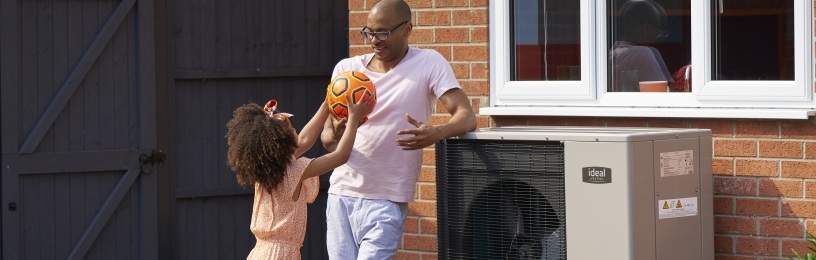
| Physical differences/how they look | The outdoor component is the network of pipes which are buried underground. Unlike an air source heat pump, there's no outdoor fan since heat is taken from the ground and not the air. Ground source heat pumps typically have an indoor unit which resembles a large cabinet. | Air source heat pumps can vary in size. They have a large external unit which looks similar to an air conditioning unit. If you don't already have a hot water cylinder, you will need to install one. |
| Lifespan | A ground source heat pump's indoor unit tends to last for around 25 years, whilst the external pipes can last up to 50 years! | An air source heat pump has a lifespan of around 15-20 years, however, it could be longer if you have regular maintenance. |
Which heat pump is right for your home?
Property types
| Ground source heat pumps | Air source heat pumps | |
| Newbuilds | If you're considering a ground source heat pump it's important to kick it off from the start of construction as the trenches can be dug in during this time, making it a more streamlined process. However, make sure to consider the land that you have available. | Newbuilds are usually designed with high insulation and underfloor heating, which helps them keep heat in more effectively. This makes them more efficient when paired with an air source heat pump compared to traditional boilers, often leading to lower running costs. |
| Older properties | Installing a ground source heat pump could be a great long-term investment for your home if you have the space to install one. However, they require significant groundwork, which may not always be feasible for historic or listed buildings. | If you're looking for a less invasive option an air source heat pump could work well in an older property. Older homes tend to have more solid walls or single glazing and may lose heat more quickly. So, it's important to assess insulation levels and consider whether additional upgrades are needed to increase efficiency. |
| Block of flats | Living in a flat doesn't mean you have to miss out on the benefits of a heat pump. If you can get your building on board, it's possible to share a ground source heat pump by having ground loops installed for the whole building and connecting multiple heat pumps. | Installing a heat pump in a flat is possible but can be difficult. Ground floor flats usually have space for the outdoor unit, but upper floors may not. According to Energy Saving Trust, a compact heat pump could work, needing just an 80cm x 80cm space near an exterior wall. |
Land available
For any heat pump, you’ll need to consider available space. Air source heat pumps need about 2m x 1m outdoors. If you live in a listed building, a Conservation Area or a World Heritage Site, you may need planning permission. In these areas, restrictions such as not installing units too close to a road apply. If you're unsure, we recommend you speak to your local planning office for advice.
Ground source heat pumps need outdoor space for trenches or boreholes. A typical three-bed home might need two 30–40m trenches or, if space is tight, deep boreholes. Most don’t need planning permission, but check with your council if you're in a Conservation Area or a listed building.
Budget
Heat pump costs can vary. An air source heat pump typically costs £4,100(1) to over £10,000, including the £7,500 government grant and installation costs. (£4,100 price assumes reuse of a suitable existing hot water cylinder. Homes requiring a new cylinder will have an additional cost). This cost may rise if your home needs extra insulation, new pipework, or upgraded radiators. Air source heat pump running costs can vary, but for a three-bedroom home, we estimate this would cost around £938(4)a year, though switching to a heat pump tariff could lower this further.
In comparison, a ground source heat pump costs around £20,500, which is inclusive of the £7,500 government grant. This can increase if boreholes are needed instead of trenches. It can also be difficult to find a ground source heat pump tariff on the market.
Installation requirements
If you're looking at installing a ground source heat pump, there are a few things to be aware of. One of the most important things to consider is the area that you have available and whether a trench or borehole system works best for you. You'll also need space inside of your home for the heat pump unit, around the size of a fridge-freezer as well as a large hot water cylinder. It's also worth noting that the installation process would usually take one to three weeks for a professional installer to complete.
An air source heat pump is easier to install than a ground source heat pump and has fewer requirements. Once again, you'll need to make sure that you've made space for a unit both inside and outside. On average, an air source heat pump installation typically spans between 2 and 5 days.
Remember that for both installations, your boiler and electricity will be switched off at one point, so make sure to plan!
Investment outlook
From an investment point of view, a ground source heat pump might be right for you if you plan to stay in your home long-term; that's when you'll see a return on your investment. In contrast, an air source heat pump is more affordable, and you’ll notice the savings sooner, especially if you’re on a heat pump tariff. Did you know we offer a no standing heat pump charge tariff, which can help lower running costs even more.
In summary, if your home is well-insulated and you have some outside space, an air source heat pump could be a good fit. If you have more land and can afford the higher upfront cost, a ground source heat pump might be worth considering. In either case, you’re likely eligible for the £7,500 government grant.
Are there any grants/incentives available for installing a heat pump?
With the UK moving towards net zero, now is a great time to take advantage of heat pump grants for low carbon heating. The amount available to you may change depending on where you live. Here's a quick guide to what you could be eligible for:
- England and Wales: Installers can apply for a £7,500 grant through the Boiler Upgrade Scheme for air source heat pumps, available until March 2028.
- Scotland: Home Energy Scotland offers £7,500 grants (or £9,000 for remote areas) plus an interest-free loan of up to £7,500, providing up to £15,000 in support.
Low-income households: Additional funding is available in Scotland and Wales, with support for benefit recipients through the ECO4 scheme.
Next steps in getting a heat pump for your home
If you've read through this blog and decided that a heat pump may be right for you, follow the steps below to get one installed.
- Check if a heat pump is right for your home - Your installers will pick the right heat pump for your home's needs. It's also a good idea to check your EPC to see how insulated your home is to make sure that it's running as efficiently as possible. Research available grants and funding - Look into what funding is available to you to help reduce the upfront cost of installation.
- Find a certified installer - For the highest quality installation, choose an MCS-certified installer. EDF Heat Pumps isn't just MCS certified, but it's also a Which? Trusted Trader. Please note: EDF Heat Pumps only install air source heat pumps and not ground source heat pumps.
- Plan for the installation - Once you've selected your installer, you can work with them to find the best place for your heat pump. They'll also be able to advise you if you need any upgrades to your heating system.
Enjoy - Make the most of having lower energy bills and reducing your carbon footprint!
Ready to make the switch?
If an air source heat pump is the right choice for you, why not install one with EDF Heat Pumps, a Which? Trusted Trader and MCS-certified installer. They'll ensure you get a high-quality service from start to finish.
Not sure if a heat pump is right for you? We offer many efficient heating options that may suit you and your home better, including boilers and electric heating. Plus, with our range energy tariffs, from solar tariffs to air source heat pump tariffs, we can help you maximise your energy savings no matter what system you choose!


