Radiator buying guide: how to choose the best type for your home
Choosing the right radiators for your home is key to keeping it cosy whilst managing costs. By selecting the most efficient heating option for your space, you could reduce your energy bills - making it well worth some careful consideration. To help you make the best choice, we’ve put together this blog as a radiator buying guide. From radiator types and materials to aesthetic styles, we’ll walk you through everything you need to know.
On this page
- What are the different types of radiators?
- What are the different styles of radiators?
- What materials are radiators made of?
- Factors to consider when buying a new radiator
- Installation mistakes to avoid
- How to maintain your radiator to keep it running smoothly
What are the different types of radiators?
Central heating
This is the most common type of radiator that we have in our homes, because they're cost-effective and reliable. Central heating works when a single source (usually a boiler) warms up water or air and spreads heat throughout your home.
Electric radiators
More people are starting to choose electric heating over other types because it's efficient and better for the environment. It covers a range of systems, including:
- Electric radiators
- Storage heaters
- Electric boilers
- Underfloor heating
Dual fuel radiators
A dual fuel radiator lets you switch between a gas powered boiler and electric, offering a more flexible heating system than others. With dual fuel radiators, you can heat things independently from your main system, such as a towel rail. This is great in the summer when you don't need full heating but still want dry towels.
Similarly, dual fuel burners give you the option of using gas or oil as your energy source. This flexibility allows you to choose the most cost-effective or readily available fuel, making them a practical choice for homes in areas with changing energy prices or limited access to certain fuels.
What are the different styles of radiators?
Single/double panel radiators
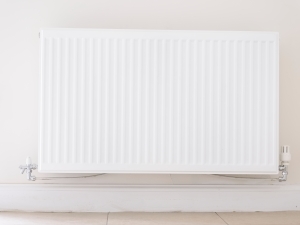
Single-panel radiators are the most common type of radiator found in the UK. They work by having a single panel with convector fins on the back, allowing it to heat your home evenly. Single-panel radiators are a great option for your home if you're looking for a cost-effective and space-saving option.
Double-panel radiators have two panels with convector fins sandwiched between them. If you're looking to heat a larger room, double-panel radiators could be a good option for you, as they're able to heat a large surface area quickly and efficiently.
Horizontal radiators

If you're looking for a simple swap when it comes to upgrading your radiator, then a horizontal one could be the way to go. Most homes have horizontal radiators, so it's an easy swap. They can also be installed below windows to save space, and outside air can be used to speed up the heating process.
Vertical radiators
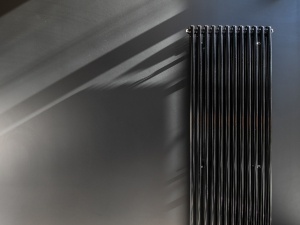
A vertical radiator is similar to a horizontal one in the way that it works, providing the same heat output. The benefit of a vertical radiator is that it can help you save space, going up the wall rather than along it. There's also fewer pipes which means that you can place it anywhere.
Towel rails/radiators
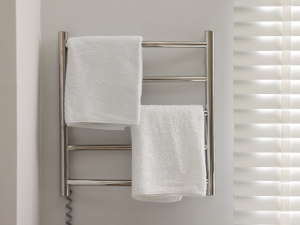
Like standard radiators, a towel radiator is designed to keep your bathroom warm while helping to reduce dampness and mould. In the winter, heating in bathrooms is essential as it dries out moisture from your showers and towels, preventing build-up and keeping your space fresh.
Designer radiators
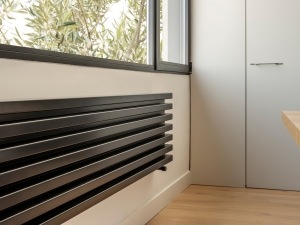
Designer heaters are a modern alternative to traditional heating methods. They still efficiently heat your home; however, they often offer special features like temperature control, space-saving profiles, and sleek designs.
Mirror radiators

Mirror radiators/heaters are a discreet option for when it comes to heating your home and are ideal for smaller spaces to make them look bigger. They can also be good for bathrooms as some have anti-fog/de-mister features so they won't fog up when there's water vapour in the air. They provide a stylish and practical solution for any home.
What materials are radiators made of?
Radiators are made from metals which efficiently conduct heat to warm your home. Each material has its own benefits, so it's important to consider which one suits you best.
| Material | Heat-up speed | Efficiency | Cost | Best for |
|---|---|---|---|---|
| Mild steel | Moderate | Good - heats rooms reasonably quickly and retains heat better than aluminium | Most affordable | Everyday homes needing an affordable, reliable heating solution |
| Stainless steel | Moderate - fast | High - conducts heat well and retains it better than mild steel | Mid - high | Bathrooms and kitchens as they resist rust and corrosion in moist environments |
| Aluminium | Very fast | Very high - heats up almost instantly, doesn't use much water, responds quickly to thermostats | Higher | Modern aesthetics - their slim, sleek look fits in with contemporary architecture |
| Cast iron | Slow | Lower - heats up slowly but retains heat for a long time | Most expensive | Older style, traditional homes with draughty spaces |
In the UK, mild steel is the most commonly used material for radiators. It's affordable, durable and balances cost and performance well for everyday heating needs.
Factors to consider when buying a new radiator
The size of your radiator
One of the first things to consider when buying a new radiator is what size you need to efficiently heat the room. To do this, you need to measure the height, width and length of your chosen room.
You can then ask a professional to help or work out the British Thermal Unit (BTU), which measures the amount of heat you need to keep a room at a comfortable temperature. Radiators come with a BTU rating, so you can choose one that suits your room. You can use multiple radiators to meet the BTU requirements for your room if you wish.
How to work out BTU
BTU = room volume (m³) × temperature difference (°C) × 0.33 × insulation factor
- Room volume - multiply room length x width x height in metres
- Temperature difference - subtract the outdoor temperature (commonly 0-3°C) from the desired indoor temperature (usually 20°C).
- 0.33 - this represents the energy needed to warm up 1m³ of air by 1°C.
- Insulation factor - 1.0 for well-insulated rooms, 1.3 for average insulation, 1.5 for poor insulation
Example:
Let's work out the BTU for a poorly insulated bedroom, measuring 4m x 3m x 2.5m = 30m³. The target indoor temperature is 20°C and the average outside temperature in winter is 3 °C.
BTU = 30 x 17 x 0.33 x 1.5 = 252.5. Multiply by 10 to get the final BTU figure = 2525.
You may need to adjust this figure depending on structural features:
- Add +25 % for single glazing, +10 % for large window areas
- Add +20–30 % for rooms with two or more external walls
- Add +10–15 % for north-facing orientation
- Add +5–10 % for unheated floors or high ceilings
- Reduce −5–10 % for triple glazing or south-facing exposure
So if our bedroom had single glazing, we would add 25% of 2525 (631) to 2525. 2525 + 631 = 3156.
It can be complex to work out BTU yourself, as it depends on many different factors. There are various online calculators available that can help you work it out, making it easier. You can also get the help of a professional.
A general indication of BTU by room size:
| Room | BTU |
|---|---|
| Small cloakroom or WC | 400 - 1000 |
| Small bedroom or office (approx. 3m x 3m) | 2000 - 3000 |
| Medium bedroom or lounge (approx. 4m x 4m) | 3000 - 4000 |
| Large living room (5m x 6m +) | 5000 - 6000 |
| Kitchen-diner (typically cooler due to ventilation) | 4000 - 7000 |
We don't recommend guessing your BTU, though; it's important to calculate it for your exact room size. Choosing a radiator that doesn't meet the required BTU means your room will never feel warm enough; on the other hand, having a radiator with too high a heat output may cause you to unnecessarily overspend on your heating bills. So it's worth getting this right!
How many radiators do I need?
As a general rule, it's said that you need to have one radiator for every 5m³ of space that you need to heat. For a precise way of working it out, you can measure the room and then multiply the length of the room by its width and height to get the area in cubic metres. Divide the total by 5 to learn how many radiators you need in there.
Types of valves
Radiator valves regulate water flow into radiators, available in various designs. They ensure efficient heating by controlling the system’s flow and return. There are four main types of valves:
- Manual – Manual valves function like a tap, allowing you to manually control how much hot water flows into the radiator.
- Thermostatic (TRVs) – TRVs sense the temperature in the room and adjust the amount of heat accordingly. When the room is at an ideal temperature, the valve reduces or stops hot water flow, helping save energy.
- Lockshield – A lockshield valve is used to balance the heating system by controlling how much water returns from the radiator.
- Smart – Smart radiator valves put the control in your hands, and allow you to adjust heating schedules, detect open windows and learn your heating habits all through an app.
Choosing the right radiator valve helps ensure that your home has efficient heating whilst accessing energy savings and comfort.
The type of heating system you have
Certain radiators can be better for certain heating systems as they work most efficiently together:
- Combi boilers - these boilers provide heat on demand, so aluminium radiators work well with them as they heat up rapidly with a low water requirement. This combination is great for quick heat and potential energy savings because it's so efficient.
- System boiler - mild steel panel radiators work well to provide consistent warmth with a system boiler; they're a good all-rounder and a common choice. Aluminium radiators are still a good option here for super-fast heating.
- Conventional boiler - similarly to the other boiler types, you can rely on both aluminium and steel panel radiators to work most efficiently with a conventional boiler.
- Air source heat pump - larger radiators with a big surface area are ideal for the lower water temperature of heat pumps. Whilst double or triple panelled radiators work especially well, avoid small and designer radiators as they won’t give enough heat output.
Where should I put my radiator?
To make sure you maximise your heating, it's important that you place your radiator in the coldest part of the room, which is usually near windows. However, in modern homes where cold spots are less common, you can position the radiator where furniture won't block it or where it won't take up valuable wall space.
Energy efficiency
When picking a radiator, it's important to select one that has high energy efficiency, helping you get the most value for your money.
Another way to increase efficiency is to install a smart thermostat. It allows you to control the temperature in individual rooms from your phone, making sure that your heating is only on when you want it to be.
Style preference
Although performance is key when considering your radiator, the design is also important. Radiators come in a variety of shapes, sizes and colours, so it's important to choose a radiator which complements your home. Whether you're in an older home which better suits a cast iron radiator or a modern one which calls for stainless steel. You can even paint your radiators to fit in with your interior design choices!
Cost
The final thing to consider is how much you want to spend on your new radiator. Standard options start from around £40 and can go up to £250 for larger sizes. For something more stylish, like designer and towel radiators, they range from around £125 to £350, with finishes like chrome costing more. Depending on the complexity of the job, installation runs from around £150, so it's important to consider all of your options when looking into buying your radiator.
Installation mistakes to avoid
Incorrect placement and sizing
To make the most of your radiator, it's important to pick the right size and location for it. If the radiator is too small or is poorly placed, then it could lead to uneven heat. Larger rooms typically need a larger, more powerful radiator.
Blocking heat flow with furniture
If you place furniture in front of a radiator, it can block the heat from circulating properly and could even damage your furniture over time. It's recommended that you leave about 15-30cm of space between your radiator and furniture to allow for air to flow freely.
Not bleeding your radiator properly
If your radiator isn’t heating up properly, air might be trapped inside, preventing the hot water from circulating. This can cause it to only heat up halfway. If your radiator feels cold even when the heating is on, it’s probably time to bleed it. Check out how to bleed your radiator.
Incorrect valve placement
Incorrect valve placement on a radiator can affect its efficiency and make it harder to control the temperature in your room. Positioning them incorrectly, such as too close to heat sources, behind furniture, or on the wrong side of the radiator, can lead to uneven heating and poor performance.
How to maintain your radiator to keep it running smoothly
Cleaning regularly
One of the ways that you can keep your energy running efficiently and continue to make savings on your energy bills is by regularly cleaning your radiators. Failing to do so can reduce the amount of heat that's being created and raise energy usage. You should be cleaning them once or twice a year, especially if your home has pets, dust or people with allergies.
Regular servicing
It's recommended that you have your radiators serviced at least once a year to make sure they're running as efficiently as possible. The best time to service your radiators is in the autumn, just before winter. This is because it would have been off all summer, and problems can often surface when you turn the heating back on.
Checking for leaks
Getting into the habit of regularly checking for leaks can help you catch leaks before they cause significant damage. Even small radiator leaks can cause damage, so it's important to catch them when they start and avoid damp or mould growth, which can harm both your home and your health.
Bleeding regularly
Not only is it important to bleed your radiator during installation, but it's also part of regular maintenance. Over time, air can become trapped inside your radiator, creating cold spots and preventing it from heating efficiently. Bleeding your radiator releases this trapped air, allowing hot water to circulate properly. Regularly bleeding your radiators can help improve heating performance and keep your home warm.
Flush your system regularly
Over time, debris and sludge can build up inside radiators, reducing their efficiency, so it's important to flush them at least once a year. However, this is a complex task, so it's recommended that you hire a professional for this.
Ensure your room is well insulated
To get the most out of your radiators, consider adding loft and cavity wall insulation. Insulating your home helps keep heat in more effectively, keeping your space warmer for longer while also preventing damp build-up.
Maximise your home's efficiency
Choosing the right radiator is just the beginning when it comes to creating an efficient and comfortable home.
Make your home more efficient by checking if your boiler is running smoothly. If it's not performing as it should, it may be worth getting your boiler repaired or getting a replacement boiler.
You could even replace your boiler altogether and invest in an air source heat pump, which is more efficient than a gas boiler, is lower maintenance and makes use of renewable energy.


