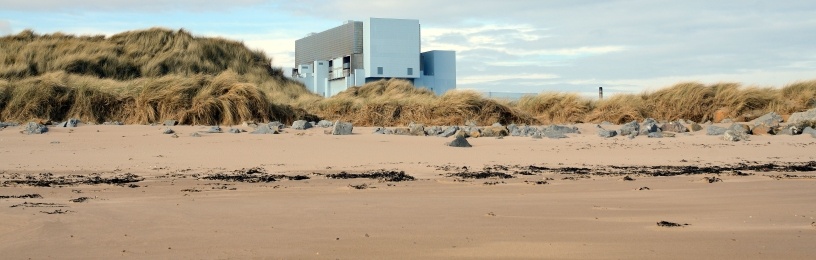
EDF confirms boost to UK’s clean power targets with nuclear life extensions
- EDF confirms life extensions for four UK nuclear power stations (total 4.6GW), with Heysham 2 and Torness now due to generate until 2030
- The decision will help to boost energy security and reduce dependence on imported gas<
- Life extensions will continue to support more than 3,000 jobs at sites across the UK, especially East Lothian, Lancashire, Teesside and Gloucester
- EDF has invested more than £8bn in the nuclear fleet since 2009, alongside re-starting the UK civil nuclear programme at Hinkley Point C and Sizewell C
Four nuclear power stations will generate for longer in a boost to the UK’s energy security and clean power targets.
A decision taken (3 December) by EDF will see the lifetimes of all four generating Advanced Gas Cooled Reactor stations extended.
Heysham 2 (Lancashire) and Torness (East Lothian) will keep producing zero-carbon electricity for an additional two years to March 2030 while Heysham 1 (Lancashire) and Hartlepool (Teesside) will produce power until March 2027, an extension of one year.
As well as bolstering energy security, the decision supports plans for the rapid expansion of renewables by helping to maintain grid stability. It also helps limit the UK’s dependence on imported gas, with a further 45TWh of output displacing around 9.3bn cubic metres of gas over the extended lifetimes. That is the equivalent of 62 LNG tankers, more than 20% of last year’s LNG imports.
Mark Hartley, Managing Director of EDF’s Nuclear Operations business, said: “Today’s decision is testament to EDF’s ongoing investment in the UK’s nuclear fleet and the hard work of the employees and suppliers supporting these sites.
“When EDF acquired these stations in 2009 they were all due to end generation by early 2023 which would have left the UK with just one generating nuclear station at Sizewell B. Careful stewardship and around £8bn of investment since 2009 has seen several life extensions for these stations and much higher output than was predicted.”
Secretary of State for Energy and Net Zero, Ed Miliband, said: “EDF’s decision to keep four nuclear plants online is a strong endorsement of our clean power mission.
“These extensions are a major win for our energy independence – powering millions of homes for longer while supporting 3,000 good jobs across Lancashire, Teesside, and East Lothian. We can’t achieve clean power by 2030 without nuclear, which provides an all-important steady supply of homegrown clean energy.
“This will come alongside our backing for new nuclear including supporting the completion of Hinkley Point C, confirming £2.7 billion for Sizewell C, and pressing on with contract negotiations for our small modular reactor competition.”
The decision, taken after a rigorous review process over the past seven months, follows the recent publication of the Clean Power 2030 report by the energy system operator, NESO, which outlined the importance of AGR life extension in reaching the UK Government’s clean power goals.
NESO Chief Executive, Fintan Slye, said: “I welcome today’s announcement from EDF on their plant life extensions. NESO’s advice to the UK Government on delivering clean power by 2030, and our Future Energy Scenarios, show the important role that nuclear power will play in the electricity system to 2030 and out to 2050.”
EDF will invest a further £1.3 billion in the five generating stations over the next three years (2025-27) on top of the £8 billion already invested since 2009 to safely extend operating lifetimes. So far, the nuclear fleet has generated over 240TWh more electricity than expected back then, enough zero carbon electricity to power every UK home for two years.
As well as helping Britain achieve its clean power targets this decision also supports the jobs of more than 3,000 staff and contractors working at the sites, as well as hundreds of companies in the supply chain.
Keeping the existing fleet running for longer will help preserve valuable skills that will be critical as the UK seeks to re-build its nuclear capability.
In 2024 EDF has hired almost 900 people across its nuclear businesses, including more than 250 graduates, apprentices and industrial placements.
EDF is committed to continuing this investment in early careers pipelines working with further and higher education providers, the National College for Nuclear and other industry training bodies.
Notes to editors
- The decision on the change of generation dates for the four stations was taken following a series of EDF executive, board and shareholder meetings on 3 December 2024. This included endorsement from Centrica, as a minority shareholder in the fleet.
- This latest lifetime extension is now EDF’s most likely view, and the market has been notified accordingly.
- These dates are forecasts, and the precise dates will be determined by the results of regular graphite inspections and how those results are interpreted within EDF and by the independent regulator, the Office for Nuclear Regulation.
- End of generation dates are kept under review and revised based on the best information available at the time.
- Decisions on end of generation dates for EDF’s nuclear power stations in the UK are independent of the regulator or government and are taken by EDF’s licensee board following recommendations from EDF Nuclear Generation Limited’s Executive. They are then endorsed by relevant senior Boards and, if needed, shareholders.
- Heysham 2 and Torness were due to move into defueling in March 2028 based on a review in 2021.
- Heysham 1 and Hartlepool power stations were due to move into defueling in March 2026 based on a review in 2023.
- The results of inspections of the graphite cores during 2024 have supported EDF’s decision to extend station lifetimes.
- Find out more about the stations here.
- Sizewell B is a different type of nuclear power station, and its lifetime was not reviewed as part of this process. There is also a good opportunity to extend the lifetime of the Sizewell B station for a further 20 years, out to 2055. This will require securing a sustainable commercial model before an investment decision is taken.
- Find out about NESO’s Clean Power 2030 report here.
About EDF
EDF is driving the transition towards An Electric Britain – a secure, affordable, low-carbon future for everyone. As Britain’s biggest generator of zero carbon electricity, we are investing more than £100 million weekly in Britain’s electricity infrastructure. We supply millions of customers with electricity and help homes and businesses switch to electricity for heating, transport and industrial processes.
We operate five nuclear power stations and more than 35 onshore wind farms and three offshore wind farms. Since 2009, EDF has invested almost £9 billion in the nuclear fleet to improve reliability and extend station lifetimes. The five generating stations currently supply about 12% of the UK’s electricity demand.
EDF is building the UK's nuclear renaissance with the construction of a new nuclear power station at Hinkley Point C. We are a minority investor (12.5%) in and major supplier to a replica plant at Sizewell C in Suffolk. Hinkley Point C and Sizewell C will provide low carbon electricity to meet 14% of UK demand and power around 12 million homes. EDF Group companies Framatome and Arabelle Solutions have a presence in the UK and manufacture critical equipment such as reactor pressure vessels and turbines.
EDF is enabling its 5 million customers, both in business and at home, to choose electric solutions that save cash and carbon, whether it is buying an electric car, generating and storing electricity, selling energy back to the grid or installing solar panels or a heat pump. In 2025, EDF’s Customers business was ranked as one of the Sunday Times’s Best Place to Work.
It is also one of the UK’s leading developers of renewable energy through EDF power solutions UK and Ireland. We have more than 2GW of renewable generation in operation and over 10GW in construction, planning and development across a range of technologies including onshore and offshore wind, solar and battery storage.
We are one of the largest suppliers to British business and a leading supplier of innovative energy solutions that are helping businesses become more energy independent. In addition, the company’s energy services business, Dalkia, is one of the UK and Ireland’s largest technical service providers.
Related articles

Heysham power station apprentices are on the right track

UK energy security supported by further nuclear power station life extensions
