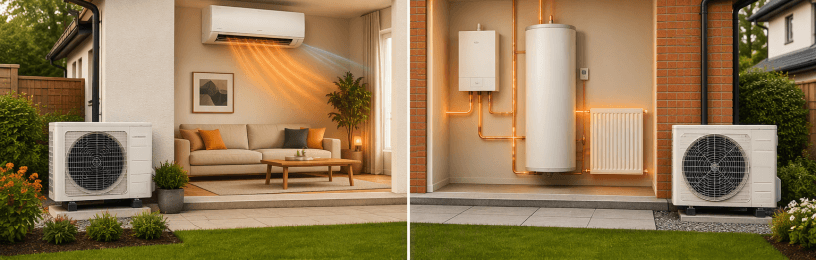
Air-to-Air vs Air-to-Water Heat Pumps: What's the Difference?
If you’re considering heat pumps for your home, you probably know about two main types: air-to-air and air-to-water. Both extract energy from the outside air to warm your home, but they heat differently. This affects installation, running costs, comfort, and whether they fit your property. This guide compares air-to-air and air-to-water heat pumps, outlines the pros and cons of each, and helps you choose the best one for your home.
What is an air-to-air heat pump?
An air-to-air heat pump extracts energy from outside and uses it to warm your home. Many of these systems can also reverse the process in summer to cool your space, similar to air conditioning. Unlike air-to-water heat pumps, air-to-air models don’t connect to radiators or underfloor heating; they heat rooms directly with warm air.
There are a couple of types of air-to-air systems; these are
Air-to-air heat pumps, which include a cylinder that provides hot water. If you're installing one of these systems, MCS are currently working through the certification process, and eligible customers should be able to apply for the £2,500 grant in England and Wales shortly.
Air-to-air air conditioning systems, where you don't have a cylinder, so you must have a separate water heating system
As summers get warmer, air-to-air (air con systems) are becoming more popular because they're easy to install, and most people are installing them to cool their homes. This year, air conditioning sales went up, and Rightmove saw a 104% increase in searches for homes with air conditioning this summer compared to the same time last year, as temperatures soared. Experts expect this trend to continue next year.
However, they don’t provide hot water unless you add a separate system. Some homes install them as a way to cool, not heat, their homes.
What is an air-to-water heat pump?
An air-to-water heat pump, or air source heat pump as it is more commonly known, takes heat from the outside air and uses it to warm water. This water then flows through radiators, underfloor heating, or a hot water tank to heat your home. Because it connects to your central heating system, it can provide both warmth and hot water for your entire house.
Benefits of installing an air source heat pump are:
- they are up to 300% more efficient than a standard gas boiler(1)
- EDF customers can save £146 a year by choosing our air source heat pump tariff(2)
- they reduce your carbon footprint by around 13% a year(3)
That’s why some UK homes choose air-to-water systems over gas boilers, LPG or oil heating systems. To learn more, check out our air source heat pump vs gas boilers guide.
Air-to-air vs air-to-water heat pumps: key differences
| Feature | Air-to-Air Heat Pump | Air-to-Air system (air conditioning) | Air-to-Water Heat Pump |
|---|---|---|---|
| Home heating | |||
| Cooling |
| ||
| Hot water |
| ||
| Works with radiators |
|
| |
| Works with underfloor heating |
|
| |
| Indoor units required |
| ||
| Installation complexity | Medium | Lower | Higher |
| Typical upfront cost | From £4,500 (including cylinder) Depending on how many units you want to install. | From £2,500. Depending on how many units you want to install. | From £13,500. (Grants and finance packages are available to help with costs). |
| Government grants | £2,500 in England and Wales. No grant available currently in Scotland. | No grant | Available to eligible homes England and Wales Boiler Upgrade Scheme: £7,500 off standard fossil fuel replacements or £9,000 off oil/LPG systems, if the home is off the gas grid. Scotland Apply for up to £7,500 (or £9,000 with rural uplift) via Home Energy Scotland, plus an optional interest-free loan of up to £7,500. |
| Best suited to | Smaller homes or flats. Suitable for supplying heat or cooling to rooms in your home that currently have none, like garden rooms and conservatories. | As this is more air conditioning, it suits customers who want cooling but can also top up their heating. | Homes replacing a boiler/LPG/or oil heating. |
*Cooling capabilities vary by heat pump model and system design. This might involve a specialist install.
Which heat pump is cheaper to install?
Air-to-air heat pumps are cheaper to install as they don't require connecting to radiators or pipes.
Installation usually means fitting:-
- One outdoor unit
- One or more indoor units
- Refrigerant pipework
Air-to-water systems are often more complicated. This is because you're replacing an existing heating system with a totally new one.
Depending on your home, installation might also include:-
- A hot water tank
- Changes to pipework
- Upgrades to radiators
If you’re replacing an existing heating system, check out our guide to air source heat pump costs.
Your best option depends on what you're trying to do: replace an old, inefficient heater or install a system to heat and cool rooms in your home that currently have no heating or cooling.
Which heat pump costs less to run?
The cost of running a heating system depends on a few things, like how well your home is insulated, how efficient your heat pump is, energy prices, the weather outside, and how you use heating at home.
A good heat pump can deliver about 3 to 4 units of heat for every unit of electricity it uses, making it much more efficient than traditional fossil-fuel heating.
Air-to-air systems heat rooms directly, but air-to-water systems better warm the whole house and provide hot water. They're a popular choice for many UK homes.
Homes with air-to-water heat pumps might also qualify for special heat pump tariffs, depending on how they set up their systems.
Which heat pump is more efficient?
Both types are more efficient compared to fossil fuel heaters.
Air-to-air heat pumps can be especially efficient when heating small spaces because they heat the air directly, rather than moving heat through water and pipes.
Their efficiency depends on:
- How the system is designed
- How it’s installed
- How insulated your home is
- The amount of heat needed
- How you use it
Air-to-water heat pumps can be more than three times as efficient as a typical gas boiler, depending on the system.(4) This means that for each unit of electricity they use, they can produce over three units of heat to warm your home. On the other hand, an A-rated gas boiler is about 90% efficient, so it wastes around 10% of the energy it consumes. Learn more about air source heat pump efficiency.
Can both heat pumps cool your home?
Air-to-air heat pumps are better for cooling, especially if that’s important to you.
Most air-to-air systems can switch between heating and cooling. But air-to-water pumps focus on heating and hot water. Some models can cool too, but it depends on the system and its design.
If cooling matters to you, consider EDF’s air conditioning systems.
Can both heat pumps give you hot water?
Not all heat pumps give you hot water.
Air-to-air heat pumps with a cylinder do supply hot water. Air-to-water heat pumps can heat water for showers, baths, taps, and central heating. They can often replace many boilers and oil or LPG systems.
However, air conditioning units don't heat water, so you would need to have a separate hot water solution.
Are there grants for both types?
Government support and eligibility can change over time. If you’re considering installing an air source heat pump or any other type of heat pump, check the latest grant information, including the Boiler Upgrade Scheme and local funding through schemes like the Warm Homes Grant.
The UK government's Boiler Upgrade Scheme currently offers grants for qualifying heat pump installations, with amounts depending on the system and your eligibility.
The table below shows current grants across the UK. These are subject to change at any time
| Type of heat pump | Grant in England and Wales | Grant in Scotland |
|---|---|---|
| Air-to-water heat pump | You can get £7,500 through the Boiler Upgrade Scheme. Plus, until March 2027, you’ll get an extra £1,500 if you're swapping out an oil or LPG system. | £7,500 (or £9,000 with rural uplift) via Home Energy Scotland, plus an optional interest-free loan of up to £7,500. |
| Air-to-air heat pump | £2,500 towards an air-to-air heat pump The heating system must replace a fossil fuel existing system to be eligible for this grant. The new system must also provide hot water. | Nothing currently available |
For the latest details, see our guide to air source heat pump grants.
Pros and cons of air-to-air heat pumps
Pros:
- Provide both heating and cooling
- Easier to install
- Usually cost less upfront
- Good for homes without water-based heating systems
- Quick temperature control in each room
Cons:
- Usually don’t supply hot water
- Don’t work with radiators
- Indoor units are visible in rooms
- Might not suit those wanting to replace a boiler or other heating system completely
Pros and cons of air-to-water heat pumps
Pros:
- Offer heating and hot water
- Work with radiators and underfloor heating
- Can often replace gas boilers/LPG and oil heating for the whole house
- Supported by dedicated air-source heat pump setups
Cons:
- Higher installation costs compared to installing an air-to-air heat pump
- More complex to set up
- May need radiator upgrades
- Take longer to install
Why do UK homeowners like air-to-water heat pumps?
Most UK homes already use wet central heating with radiators and hot water tanks or boilers.
Because air-to-water heat pumps work similarly, you can often switch to a greener system without changing how you heat your home or use hot water.
They keep working even in really cold weather because they’re built to function down to -25°C. When homeowners swap out old heating systems, many choose air-to-water pumps. As energy prices keep rising, customers can move away from fossil fuels like LPG or oil and switch to air-to-water heat pumps. Head to our guide: oil boilers vs air source heat pumps.
How do you choose the right heat pump for your home?
No single system is perfect for everyone. Your choice depends on your home’s layout, how much heating you need, and what matters most to you.
Pick an air-to-air pump if you want:
- Cooling with additional heating for rooms that your current heating system doesn't cover, like conservatories
- You already have a hot water system
- Easy installation
- Room-by-room control
Pick an air-to-water pump if you want:
- To replace an existing inefficient heating system or if you're upgrading your home
- Heating and hot water from one system
- Radiators or underfloor heating
- A full-home heating system
The best choice considers your home’s insulation, heating needs, hot water use, and lifestyle. Expert advice helps you find a system that fits your home, instead of just choosing the cheapest option.
Summary
Both air-to-air and air-to-water heat pumps are energy-efficient ways to heat your home. However, the big question is what you want to achieve and whether the system will deliver what you need.
Air-to-air systems can heat and cool your home and are often easier to install. However, they have limitations as a full heating system because they provide localised heat and don't use radiators or underfloor heating. A more popular option when replacing a full heating system is an air-to-water heat pump, which works with radiators and hot water, making it a common choice for replacing traditional boilers in the UK.
Choosing the right heat pump starts with good design, and expert advice can help you find the best fit for your home.
If you’re thinking about switching, check out our full range of air source heat pumps, read our air source heat pump cost guide, or learn about finance options.
Ready to make the switch to an air source heat pump?
Get a heat pump quote
Related articles

Ground source vs air source heat pumps - Which one should you choose?

