Now That’s What I Call (Carbon) Progress!
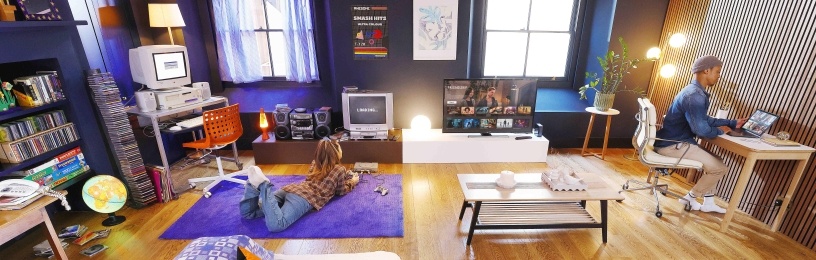
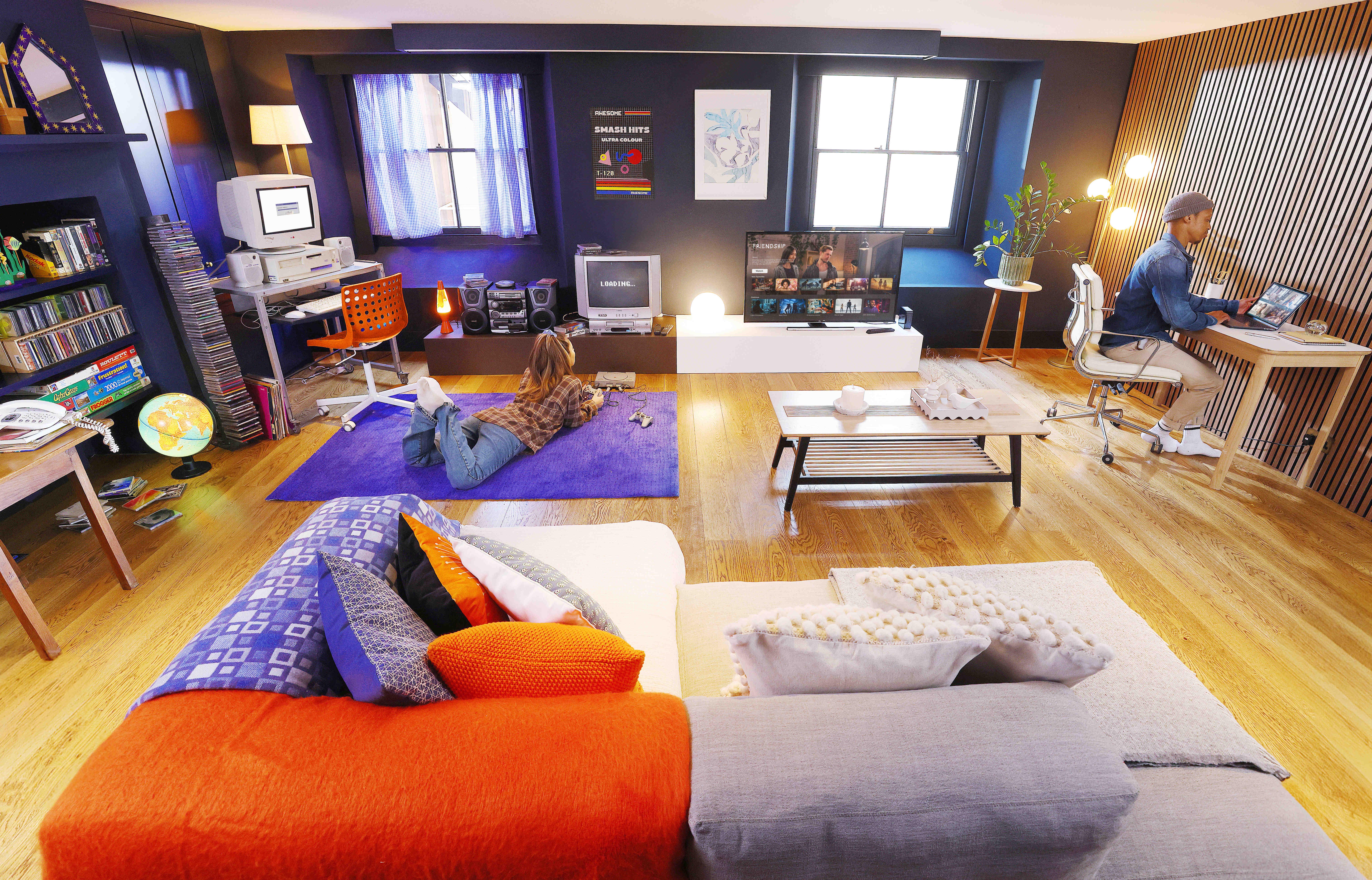
Making TikTok pasta or settling down to Strictly may have less impact on your carbon footprint than you think, as EDF data experts throwback to the ‘90s.
- New analysis shows that people’s carbon footprint of everyday activities, from settling down for ‘Strictly Saturday’ to dialling into a Zoom call, has reduced significantly compared to 1990s equivalents;
- These comparisons come as research shows over half (58%) of Brits mistakenly think the UK’s carbon footprint is worse today than it was 25 years ago;
- EDF is marking 25 years of operation in the UK by highlighting just how much progress the nation has made in reducing its carbon footprint over the past quarter of a century.
As many Brits continue to look for ways of reducing their energy use to save cash and carbon, new data from EDF reveals that people’s greenhouse gas footprint generated through everyday activities like making a TikTok pasta dish, watching Strictly Come Dancing and dialling into Zoom calls has reduced significantly compared to their ‘90s equivalents.
To mark 25 years of operating in the UK, experts at EDF have analysed the greenhouse gas footprint associated with a selection of everyday activities in 1998 compared to their equivalents today[1], from cooking on a hob to hoovering a home. This comes as new research reveals that over half (58%) of the British public mistakenly think the UK’s carbon footprint is worse today than it was 25 years ago[2], with a third (30%) believing the nation has made no headway in reducing emissions over the last quarter of a century.
In fact, the reality is far more positive, as the UK’s greenhouse gas emissions have nearly halved since the 1990s[3]. This is due to a combination of zero-carbon energy generation from companies such as EDF, which has invested almost £25bn in its 25 years in the UK to enable households to reduce their carbon footprint and save money on their energy bills; the closure of many coal power stations; and modern upgrades designed to make technology and gadgets more energy-efficient.
The analysis found that in 1998, the greenhouse gas impact of using a desktop computer for an hour to play Sonic Adventure was 211gCO2e, while using a laptop to dial into a Zoom meeting today is only 34gCO2e today – a huge 84% lower. Cooking a dish on an electric hob was 341gCO2e, while making a pasta dish inspired by TikTok is only 120gCO2e today - 35% lower.
Running a fridge freezer for a day would have had a carbon intensity of 938gCO2e back in the ‘90s, whilst today it is 80% lower at 183gCO2e. Watching Noel’s House Party on a conventional TV in 1998 had a carbon intensity of 180gCO2e, compared to 29gCO2e for watching Strictly Come Dancing on the latest OLED model in 2023.
|
1998 |
2023 |
1998 Greenhouse gas impact (gCO2e) |
2023 Greenhouse gas impact |
% Reduction |
|
Cooking a fried egg on an electric hob |
Cooking a TikTok pasta dish on an induction hob |
341 |
120 |
65% |
|
Heating turkey twizzlers in an electric oven |
Heating nuggets in an high-tech electric oven |
150 |
45 |
70% |
|
Running a standard dishwasher for a full load |
Running a modern, efficient dishwasher for a full load |
512 |
135 |
74% |
|
Running a fridge/freezer for 1 day |
Running a fridge/freezer for 1 day |
938 |
183 |
80% |
|
An hour spent playing Sonic Adventure on a desktop computer |
An hour spent dialling into a Zoom meeting from your laptop whilst working at home |
211 |
34 |
84% |
|
Washing a pair of Karl Kani jeans |
Washing a pair of reclaimed-vintage Levi’s jeans |
481 |
135 |
72% |
|
Vacuuming a 3-bedroom house with Henry Hoover |
Vacuuming a 3-bedroom house with a Dyson cordless vacuum |
35 |
7 |
80% |
|
Heating your Sunday roast leftovers in a conventional microwave |
Heating your takeaway ramen in a modern, energy efficient microwave |
145 |
59 |
59% |
|
Watching Noel’s House Party on a CRT TV |
Watching Strictly Come Dancing on an OLED TV |
180 |
29 |
84% |
|
|
|
1998 vehicle carbon emission (gCO2e/km) |
2023 vehicle carbon emission (gCO2e/km) |
% Reduction |
|
Commuting in a Ford Mondeo |
Commuting in a Peugeot E-2008 |
191 |
50 |
74% |
Other household activities which demonstrate this progress include using an induction hob to cook a TikTok inspired pasta dish compared to frying an egg an electric hob in 1998 (65% reduction), cooking nuggets in a high-tech electric oven versus a portion of turkey twizzlers (70% reduction) and commuting in an electric Peugeot E-2008 versus a petrol driven Ford Mondeo (74% reduction)[4]. Yet despite these huge savings, those polled believe they have only seen a carbon emission reduction of 10%, 11% and 25% respectively.
Despite the progress in adopting zero carbon electricity generation sources such as wind, solar and nuclear power, only 1 in 10 people believe this has made a major contribution to reducing the nation’s carbon footprint over the past 25 years, with 6% thinking it has made no contribution at all.
Whilst being in the dark about our progress on reducing carbon emissions, 71% of Brits are eager to play a part. Almost three-quarters (73%) have tried to minimise waste by recycling, 67% have saved energy by switching off lights and unplugging electronics, and 95% say it is important that any new appliance or product in their home is energy efficient. However, over a third (35%) are worried that what they do does not make much, or any, difference.
Philippe Commaret, Managing Director for Customers at EDF comments: “Many of us remember the days of desktop computers and CRT TVs, but most of us don’t realise just how much progress has been made in reducing the nation’s carbon footprint since the late 1990s. In fact, this country has taken significant strides towards lower carbon living, and it's striking to see just how much greener many of our daily activities are now than they were 25 years ago. Many consumers are taking steps in their daily lives to save cost and carbon, but there are clearly still big concerns over the progress we’re making as a nation.
“Whilst 90s nostalgia may be trending, none of us want to see the old levels of carbon intensity make a comeback in our everyday activities. As Britain’s biggest generator of zero carbon electricity, we’re committed to continuing to invest in methods such as wind, solar and nuclear to help the nation reach net zero by 2050.”
For advice on how to lower your homes’ carbon footprint and save money on your energy bills, visit EDF Energy Efficiency.
For more information contact:
EDF Press Office: edfeconsumer@goodrelations.co.uk
Notes to Editors
- Calculations took into account daily kWh output of each appliance from (Energy Consumption in the UK (ECUK): Final Energy Consumption Tables 1970-2022, published 28 September 2023 multiplied by the carbon intensity of the national grid (2023 Government Greenhouse Gas Conversion Factors for Company Reporting - June 2023).
- Research of 2,000 UK adults, conducted by One Poll in December 2023
- 2022 UK greenhouse gas emissions, provisional figures
- Vehicle comparison calculations based on GHG conversion factors 2023, UK electricity.

About EDF
EDF is driving the transition towards An Electric Britain – a secure, affordable, low-carbon future for everyone. As Britain’s biggest generator of zero carbon electricity, we are investing more than £100 million weekly in Britain’s electricity infrastructure. We supply millions of customers with electricity and help homes and businesses switch to electricity for heating, transport and industrial processes.
We operate five nuclear power stations and more than 35 onshore wind farms and three offshore wind farms. Since 2009, EDF has invested almost £9 billion in the nuclear fleet to improve reliability and extend station lifetimes. The five generating stations currently supply about 12% of the UK’s electricity demand.
EDF is building the UK's nuclear renaissance with the construction of a new nuclear power station at Hinkley Point C. We are a minority investor (12.5%) in and major supplier to a replica plant at Sizewell C in Suffolk. Hinkley Point C and Sizewell C will provide low carbon electricity to meet 14% of UK demand and power around 12 million homes. EDF Group companies Framatome and Arabelle Solutions have a presence in the UK and manufacture critical equipment such as reactor pressure vessels and turbines.
EDF is enabling its 5 million customers, both in business and at home, to choose electric solutions that save cash and carbon, whether it is buying an electric car, generating and storing electricity, selling energy back to the grid or installing solar panels or a heat pump. In 2025, EDF’s Customers business was ranked as one of the Sunday Times’s Best Place to Work.
It is also one of the UK’s leading developers of renewable energy through EDF power solutions UK and Ireland. We have more than 2GW of renewable generation in operation and over 10GW in construction, planning and development across a range of technologies including onshore and offshore wind, solar and battery storage.
We are one of the largest suppliers to British business and a leading supplier of innovative energy solutions that are helping businesses become more energy independent. In addition, the company’s energy services business, Dalkia, is one of the UK and Ireland’s largest technical service providers.
Related articles

Research from EDF reveals ‘flexy’ beats flirty when it comes to finding ‘the one’

High streets buckling under compounding costs, major survey finds, as VAT edges ahead of wages as small businesses' heaviest pressure
