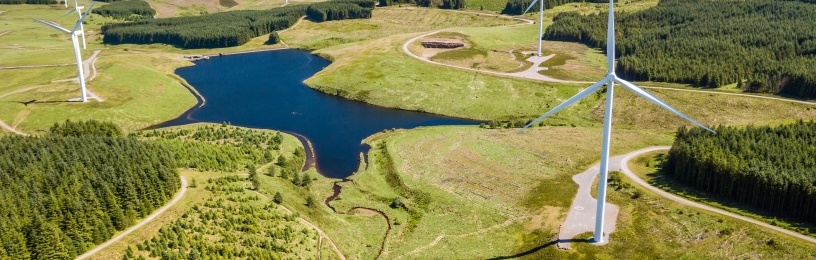
How green is your energy tariff?
The UK is committed to achieving net-zero greenhouse gas emissions by 2050, and many households are now opting for green energy to help reach this goal. With over half of UK electricity tariffs being marketed as renewable, it’s easy to assume that you’re using 100% renewable electricity all the time, but in reality, the journey from renewable generation to your plug socket isn’t all that simple. For anyone considering switching energy suppliers, it’s worth understanding how these tariffs really work.
What is a green energy tariff, and how do they work?
Even when your tariff promises 100% renewable energy, gas and coal will still power your home at times because all electricity generated in the UK - whether from wind, solar, hydro, nuclear, or fossil fuels - feeds into the same National Grid. The Grid doesn’t separate renewable from non‑renewable sources, so what you actually receive is always a mix that reflects real‑time generation across the nation.
Green tariffs don’t change the physical electricity entering your home; instead, your supplier matches your usage with renewable generation through certificates or direct purchases. “Renewable” usually refers to sources like wind, solar, and hydro, while “green” can also include lower‑carbon options such as nuclear or biogas. This is why your home can’t run on pure renewables around the clock, even though your tariff supports more overall clean energy production.
Is there such a thing as a green energy supplier?
For every 1,000 units of renewable electricity generated, Ofgem issues one Renewable Energy Guarantee of Origin (REGO) certificate. When energy suppliers buy renewable power from generators, they also buy these REGOs for roughly 15p each and must submit them to Ofgem annually.
But the REGO market is completely separate from the electricity market. This means suppliers can buy REGOs cheaply without purchasing any actual renewable power. They can then buy their electricity from any source - fossil fuels included - as long as they hold enough REGOs to match customer demand. With those certificates in hand, they can legally market their tariffs as “100% renewable,” even if the electricity itself wasn’t.
So when you look closely at many green tariffs, you’ll find that most suppliers don’t exclusively buy or generate renewable electricity at all.
Is my energy tariff green?
Understanding whether your tariff is genuinely “green” can be confusing, especially with how REGOs work. Here’s how to check what you’re really buying:
1. Check how your supplier sources its electricity
Look for your supplier’s Fuel Mix Disclosure. Every UK supplier must publish this annually. It shows the percentage of electricity they actually buy from:
- Renewable sources
- Nuclear
- Gas
- Coal
- Other fuels
You’ll usually find this on their website under “Fuel Mix”, “Environmental Reporting”, or “Our Energy Sources”.
If the renewable percentage is low but the tariff is marketed as “100% green,” it likely relies heavily on REGOs rather than on actual renewable power purchases.
Question to ask your supplier: What’s your current fuel mix?
2. Look for transparency about REGOs
A genuinely green tariff should explain:
- Whether the supplier buys renewable electricity directly from generators
- Whether they rely mainly on REGOs to badge fossil‑fuel electricity as “green”
- Whether they invest in new renewable generation
If the explanation is vague or buried in small print, that’s usually a sign the tariff is green‑washed rather than green.
Question to ask your supplier: Do you buy real renewable electricity or just REGOs?
3. Check if your tariff is certified or backed by real generation
Some suppliers own or operate renewable assets. Others buy long‑term renewable contracts. These are stronger indicators of a genuinely green tariff than REGOs alone.
Question to ask your supplier: Do you invest in or own renewable generation?
If you’re with EDF, your tariff is classed as green
Our residential electricity tariffs are classed as green because the electricity they supply is backed by zero‑carbon generation, including:
- Wind
- Solar
- Nuclear
As Britain’s biggest generator of zero‑carbon electricity[caveat: biggest-generator], our tariffs aren’t just REGO‑backed - they’re supported by real, large‑scale low‑carbon generation. Simone Rossi, CEO of EDF in the UK, said: "EDF is continuing to invest heavily in powering, supplying and building an electric Britain. Our UK strategy is to deliver a long-term nuclear and renewables generation business, and to meet the evolving needs of our customers as more and more transition away from fossil fuels to using cleaner, more secure and affordable electricity.”
Do green energy tariffs cost more?
Not necessarily. Green tariffs used to come with a premium, but that’s no longer the norm. Because REGOs are cheap and widely available, many suppliers can label tariffs as “green” without increasing prices. The real difference in cost usually comes from how the supplier sources its electricity - tariffs backed by genuine renewable generation or long‑term investment may be slightly higher, while REGO‑only tariffs tend to be priced like any standard deal.
That is why it’s worth taking a moment to understand your energy tariffs so you can choose the best one for your home and lifestyle.
Is there any way to use only renewable electricity?
The only guaranteed way to use 100% renewable electricity all the time is to generate it yourself, and even then, this is only truly possible if you disconnect from the Grid entirely. Installing solar panels lets you generate clean energy to power your home, and modern solar batteries let you store any excess energy rather than sending it back to the Grid. This helps you use more of your own renewable electricity, and you can choose to support the wider Grid when demand is high. Pairing solar with an air-source heat pump can further cut your carbon footprint and significantly reduce your reliance on fossil fuels for heating.
The takeaway: self‑generation is the only true route to using renewable electricity around the clock. For everything else, it’s worth looking closely at how your supplier sources the “green” electricity they claim to provide.
How can we meet our Net Zero target then?
Meeting our Net Zero target means cutting emissions from the energy system while still keeping the lights on. Renewable energy is essential, and it’s growing fast, but it isn’t always available when we need it. That’s why the solution has to be a mix.
This is where we come in. We’re Britain’s biggest generator of zero‑carbon electricity[caveat: biggest-generator], producing power from wind, nuclear and solar. By combining these technologies, we can deliver reliable, weather‑proof, zero‑carbon electricity that actually displaces fossil fuels. It’s this kind of dependable zero‑carbon mix that gives the UK a realistic path to Net Zero.
EDF's commitment to renewable energy
We’re working hard to build and invest in as many renewable energy sources as possible for the UK. We currently operate 37 wind farms, 6 solar and 5 battery storage sites, with many more renewable projects in planning and development.
As a leading provider of renewable electricity, we're committed to providing reliable, low-carbon, affordable energy to the UK – and to supporting customers who want to generate and store their own.
Discover all our renewable energy projects Get a renewable energy quote today
Related articles

What is the average energy bill in the UK?

What is a kWh? Understanding electricity usage and costs
