Fish protection measures at Hinkley Point C
Hinkley Point C is the first power station on the Severn with protections for fish built into its
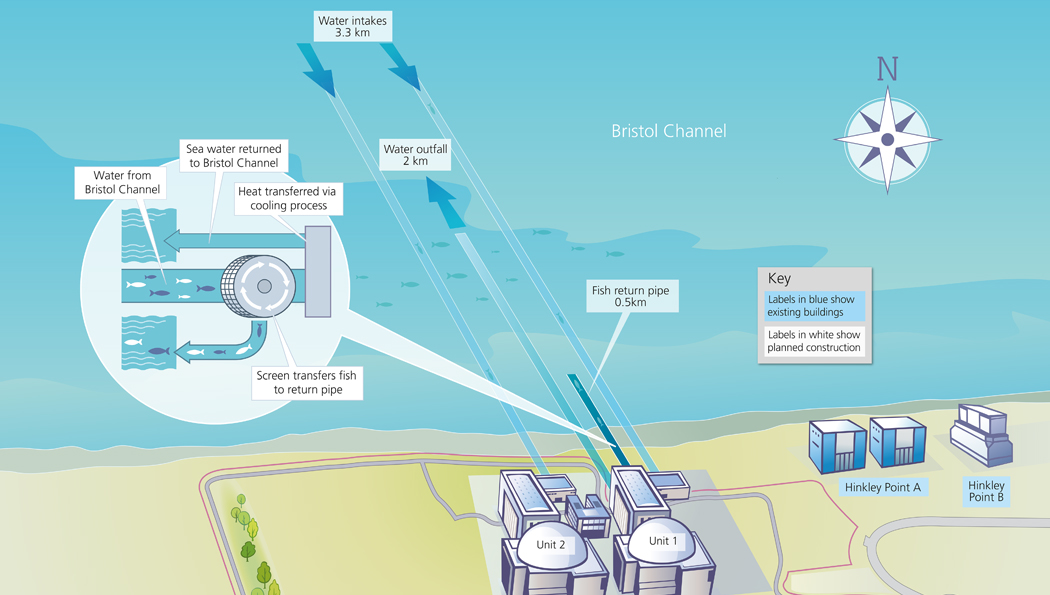
design, with specially designed low velocity cooling water intake heads, a fish return system and
an acoustic fish deterrent. The three systems will give Hinkley Point C more fish protection than any other power station in the world and will cost more than £700 million.
What fish protection measures will be used?
Many power stations have taken cooling water from the Bristol Channel in the past without impacting fish populations. Hinkley Point C will be the first to include any fish protection measures at all.
Specially designed intake heads will slow the speed of water entering the cooling tunnels, allowing fish to escape from as close as 2 metres in a 20‑kilometre‑wide channel. A fish return system will transfer fish back to the sea and a new type of acoustic system will keep hearing fish away from the area.
The risk to fish is reduced further with the intake heads being installed parallel to the Estuary's tidal flow whilst filtration systems called drum screens will be fitted in front of the cooling water pumps. These have been designed to transfer fish to the return system and then back to the sea.
New Innovations in Fish Deterrent Technology
Sea trials carried out with Swansea University have shown that a new type of acoustic fish deterrent developed for Hinkley Point C is highly effective. The innovative use of ultrasound technology has been shown to keep target fish species away from the power station’s water intakes.
Hinkley Point C’s acoustic fish deterrent has been developed by fisheries conservation experts Fishtek Marine in Devon. It can be deployed and maintained without using divers because it is so compact compared to an earlier proposed system that would have used more than 250 underwater loudspeakers.


Testing the New Acoustic Fish Deterrent
The ultrasound system has been tested at sea and in laboratory tanks by Swansea University. The sea trials have been successful and show the system is highly effective at keeping targeted fish species away from Hinkley Point C’s water intake tunnels. For example, testing of tagged twaite shad showed that after the acoustic fish deterrent was turned on, only one tagged shad came within 30m of the intake heads. This compares to 14 shad seen in the same area without the system turned on.
Swansea University research has also provided a much better understanding of the movements and location of fish populations in the Severn Estuary. It shows that salmon, migrating to the Atlantic, generally use the main channel - well away from Hinkley Point C’s water intakes. In two years, only 2 tagged salmon were detected within 1km of the intakes.
Pausing our plans for saltmarsh creation
Successful completion of the testing would mean the power station can meet all its planning obligations on fish protection and the project believes further compensation measures should not be required. As a result, Hinkley Point C has no plans at this time to continue progressing proposals for the creation of saltmarsh habitat in the local area.

Approving our plans
The results of the research, as part of an application for system deployment, will be submitted for regulatory consideration and approval later in 2026. As the authoritative regulator for this area, the Marine Management Organisation will assess and determine the application.
Questions & Answers
What is an acoustic fish deterrent?
An acoustic fish deterrent uses sound to deter fish species that have hearing, for example Salmon and Shad.
How does this new system work?
Hinkley Point C’s acoustic fish deterrent uses different technology compared to the previously considered option of placing 275 powered loudspeakers out at sea. The ultrasound deterrent operates with high and low-frequency sounds to target different types of hearing fish, including salmon and twaite shad. These systems do not harm the fish and can be tuned for specific species, therefore avoiding disturbance for larger marine mammals like dolphins or seals. This kind of high-frequency sound is already used in fishing fleets around the world to reduce bycatch.
Why is it safer than a system with loudspeakers?
Because the system uses ultrasound, it is smaller than a system using audio speakers with high voltage power cables. That means it can be self-powered using batteries, retrieved and maintained from the surface without the need for divers to operate in some of the most dangerous waters in the world with huge tidal flows and very poor visibility.
Who are Fishtek Marine?
Based in Totnes, Devon, Fishtek marine design and manufacture products that reduce the environmental impact of commercial fishing and other marine operations. They combine engineering with fisheries science to create practical, industry‑ready solutions, and their products are used in more than 40 countries.
How was the testing of the system carried out?
During the summer of 2025, hundreds of salmon and twaite shad were tagged with small electronic beacons in rivers around the Severn Estuary, including the Tywi, Usk and the Wye. 86 separate receivers were also deployed across the Estuary and around Hinkley Point C’s water intakes to detect the fish. At the same time, 36 acoustic fish deterrent units were setup around two of the intake heads, whilst the remaining two had no acoustic fish deterrents around them. By comparing the difference between the two, the team from Swansea University have been able to show that the system is highly effective at deterring fish from the areas around the intake heads.
How much harm would Hinkley C Point C cause to fish populations?
Hinkley Point C will be the first power station on the Severn with protections for fish built into its design, including specially designed low velocity cooling water intake heads and a fish return system. With these two protections, the remaining impact on fish in the Severn Estuary would be small and has been assessed with the Environment Agency at 44 tonnes a year, less than the annual catch of one small fishing vessel. With an acoustic fish deterrent, it will be even smaller.
What were the proposals to create 900 acres of saltmarsh?
In 2024, ultrasound acoustic fish deterrent technology had not been considered for Hinkley Point C. Instead, the project looked at deploying existing loudspeaker technology. Detailed investigations showed that a speaker-based system would pose serious risks to divers having to maintain the system in the dangerous waters of the Bristol Channel over 80 years. To avoid these risks to life, Hinkley Point C considered meeting environmental regulations through the creation of 900 acres of new saltmarsh to compensate for the very small remaining impact on fish. The marsh would have provided feeding and breeding grounds for some species. These proposals would have impacted farms and communities along the Severn.
The success of tests on the acoustic fish deterrent means that the saltmarsh should not be required. However, until environmental regulators approve the new system for use, the need for saltmarsh or improvement to weirs further up the Severn Estuary cannot be ruled out.
Why didn’t you use this new acoustic deterrent technology to begin with?
This innovative technology was not available when the power station gained planning consent in 2013. It has been pioneered and successfully deployed in the fishing industry to reduce by-catch and applying it to power stations had not been considered before.
What about dolphins and larger marine mammals?
The system would be tuned to maximise the effectiveness of fish deterrence whilst minimising impacts on larger marine mammals like seals and dolphins. This technology is being developed with the potential to provide flexibility when “tuning” a system to deter specific species of fish present within the Severn Estuary, whilst potentially avoiding impacts on larger mammals.
Respecting the environment
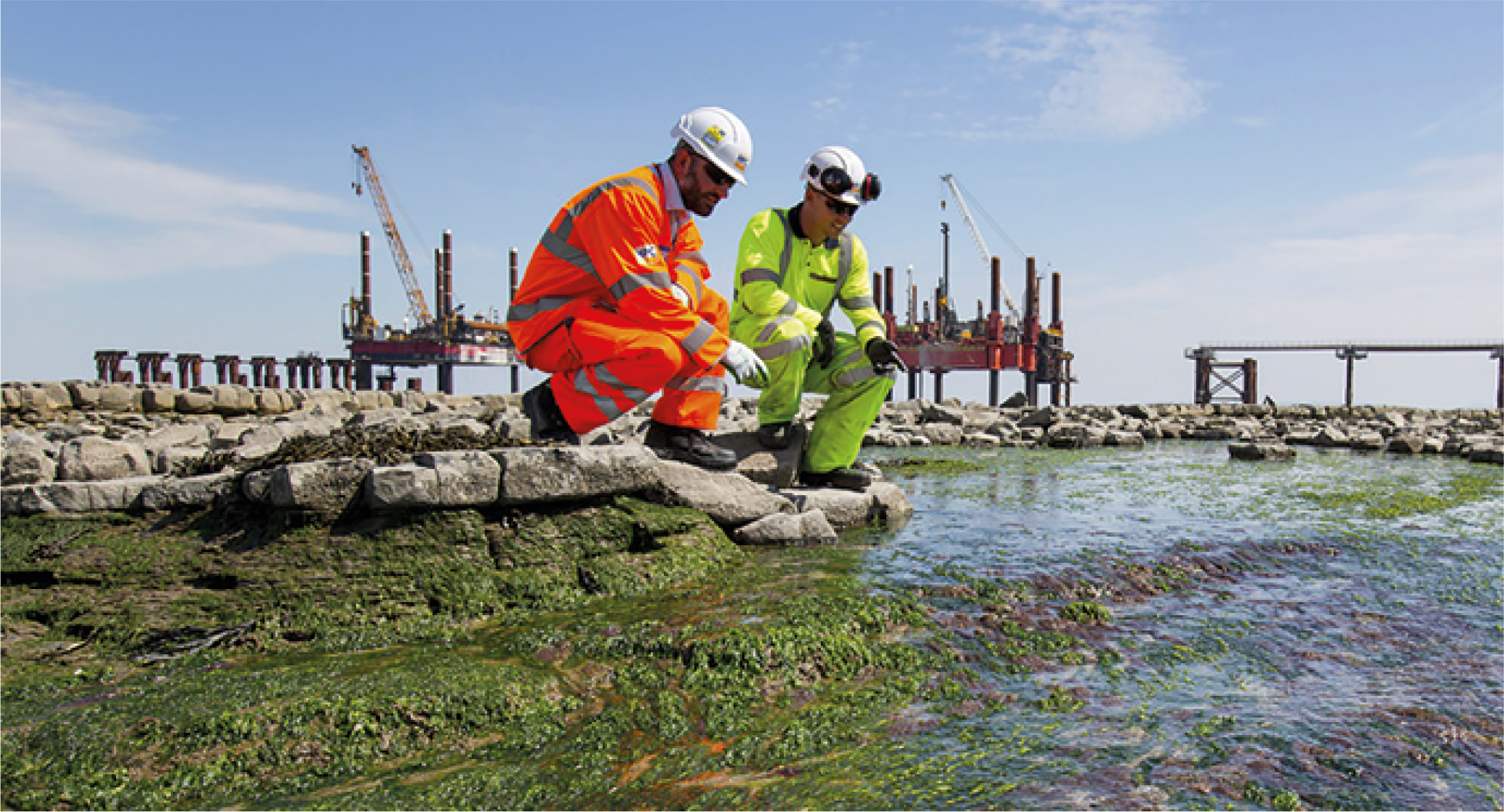
Hinkley Point C’s low carbon electricity will play a critical role in the fight against climate change as Britain moves away from fossil fuels. The power station is also being built with environmental protection in mind.
We employ environmental experts, including ecologists and marine biologists to ensure we manage our environmental footprint carefully. We’ve planted 20,000 trees around the site, we’ve replaced habitats and homes for protected species like bats, newts and badgers and created wildflower meadows specifically for wildlife foraging.
Much of our environmental work is done outside of our site in partnership with environmental organisations like the Quantock Area of Outstanding Natural Beauty, who’ve planted more than a mile of new hedgerows, ponds have been restored, and more than eight acres of new wildflower meadows have been sown via our Quantock Landscape Development Fund.
Somerset Wildlife Trust’s warden helps us manage our own nature reserve at the Hinkley Point site and they have delivered the Brilliant Coast campaign to promote and protect coastal wildlife with investment from our Community Fund. We also work closely with organisations like the Wildfowl and Wetlands Trust that manage the nearby reserve at Steart Marshes, adding to the understanding of the ecologically rich habitats around Hinkley Point.
Contact us
General Hinkley Point C enquiries: Enquiry Form|hinkley-enquiries@edf-energy.com | 0333 009 7070 (24-hour freephone) / Media enquiries: 01452 652233 (24/7) / Report fly parking: edfenergy.com/flyparking
For all other Hinkley Point C-related matters, see the contact options below.
