Enormous increase in Supplier Network costs predicted
NESO’s Latest Forecast
On 1 September, the National Energy System Operator (NESO) published its latest five year forecast for Transmission Network Use of System (TNUoS) charges. The forecast covers the charging years from April 2026 to March 2031 and shows a significant increase in expected charges to suppliers, which will appear in consumer bills.
Key Headlines
- April 2026 annual TNUoS residual supplier costs have increased by £2.7bn to £7.5bn compared to NESO’s previous forecast of £4.8bn from four months ago
- Supplier and consumer TNUoS charges will approximately double from current levels in April 2026, adding around 5% to electricity bills
- Domestic charges are predicted to increase from £51 to £93 per year, enough to take the price cap level over £1,800 for the first time in a year from April 2026
- As TNUoS charges are recovered from suppliers on a p/site/day basis, this increase in costs should be applied via standing charges
Why Forecast Accuracy Matters
Given the impact on consumer bills, this update highlights the need for clear and accurate industry forecasts. Such large changes coming only four months on from a previous forecast make it very difficult for consumers and suppliers to budget for these costs.
We note that in April it was stated that some investment costs in England and Wales were not included in the previous forecast, but no values were provided at the time. Only part of the increase now is driven by England and Wales costs being included.
These increases in costs are unwelcome news for consumers and suppliers, but they also represent critical investment that is needed to enable our future energy system. Government and Ofgem should consider the timeframe of cost recovery so that customers and suppliers have enough notice to pay these charges in a fair and transparent way. Ofgem’s cost allocation review is an opportunity to address this going forwards.
What is TNUoS?
Transmission Network Use of System (TNUoS) charges are levied by transmission companies to pay for carrying electricity from power stations through high voltage lines to the local distribution networks. These charges are used to fund the maintenance and upgrading of the transmission network.
- Some TNUoS charges vary by region, but the majority are recovered via standing charges that are the same nationally
- The level of the TNUoS standing charge is determined by the size of a site’s connection and the voltage at which they connect
- TNUoS currently makes up around 5% of consumer electricity costs, one of the larger items in energy bills
TNUoS charges are managed through price controls administered by Ofgem. The next price control period (RIIO-ET3) runs from April 2026 to March 2031. Ofgem will make their final determination on allowed revenues by the end of 2025.
Why is TNUoS Increasing?
With the transition from large, centralised generation assets to more distributed, smaller generators—particularly wind in Scotland and the North—there is a growing need to transport more electricity across the country. This requires more and bigger cables to enable the flow of power from where it is generated to where it is needed.
At the end of 2024, transmission companies published their business plans for RIIO-ET3, indicating a need to spend around £80bn over five years. That money will ultimately be funded via TNUoS charges on suppliers, although not all of it will be recovered immediately, with Ofgem deciding what is necessary and reasonable.
Why This Investment Matters
Investment in the transmission network is vital to enable Britain to:
- Use the low carbon and renewable generation already built and planned
- Minimise overall system costs
- Support new markets that pay generators, battery operators and consumers to help avoid constraints
- Reduce transmission outages and optimise system balancing actions
If this investment is not made, Britain will remain more reliant on gas generation closer to demand centres. This would increase the cost of operating and balancing the system, as renewable generation would need to be curtailed and gas-fired generation paid to replace it.
Next Steps
- Draft 2026/27 TNUoS charges will be published by NESO by the end of November
- Ofgem will publish its final RIIO-ET3 determination in Q4 2025
Ofgem will need to consider the scale of required investment, as well as the timing and distribution of TNUoS charges. Engagement with industry and consumer groups will be vital to ensure decisions are fair, transparent and manageable—particularly while bills remain high by historic standards.
Greater transparency over cost forecasts, with sufficient notice for confirmation of increases, is critical to allow both consumers and suppliers to budget effectively.
Further Detail
If you are interested in reading more detail on NESO’s five year TNUoS forecast, you can find the report and supporting tariff information here.
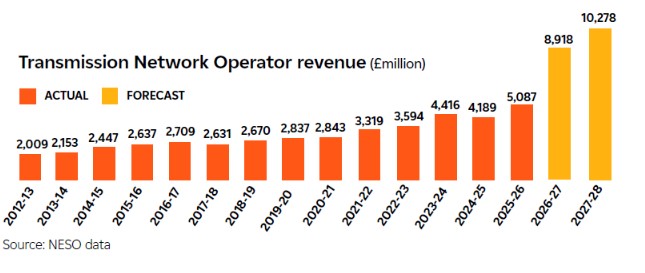
The scale of the potential increase in allowed revenues for transmission companies relative to previous and current years can be seen in the chart below:
The revenues are also expected to continue to increase over the next 5 years, as shown by this summary table of Residual charges, which make up the vast majority of supplier and consumer costs:
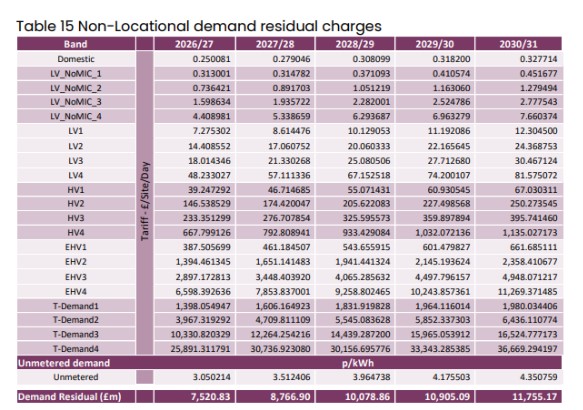
Source: August 2025 Forecast TNUoS Tariffs – Five Year View (2026/27 to 2030/31, NESO)
Related articles

Powering the UK's digital future: getting data centre connections reform right

Energy Roundup: October 2026
