Global tensions, local impact: understanding the latest gas and power price movements
Energy markets have reacted quickly to developments in the Middle East, with wholesale gas prices rising sharply and electricity prices moving higher in response.
Price movements of this scale are relatively rare. Over the past two decades they have typically been associated with major global disruptions such as the invasion of Ukraine, the Nord Stream pipeline incident or Fukushima.
Understanding what is happening requires looking beyond the headlines and examining how global energy systems and markets interact.
Global supply chains influence regional prices
Recent volatility has been linked to disruption around the Strait of Hormuz, one of the world’s most important energy shipping routes.
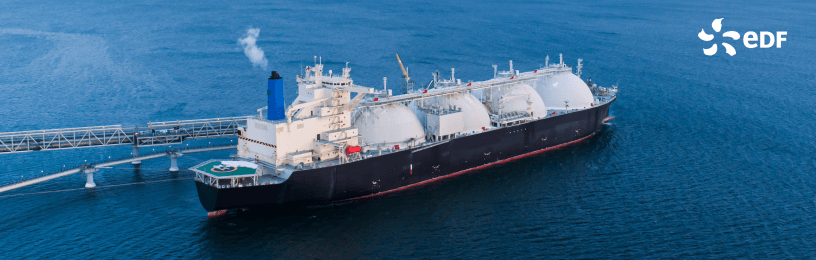
Around 20 percent of global LNG flows and up to 30 percent of global crude shipments pass through this corridor. When shipping routes become uncertain, vessels may delay transit and insurers may increase risk premiums. Even temporary disruption can affect global supply expectations.
Although Europe imports only a relatively small proportion of LNG directly from the Gulf, global LNG markets are interconnected. When supply tightens in one region, cargoes are redirected to the highest priced markets, and price signals move quickly across the system.
Storage levels and market structure
Another factor shaping market behaviour is the position of European gas storage.
Current storage levels are around 30 percent full, which is lower than typical levels for this point in the year. Storage normally plays an important role in balancing seasonal demand. Gas is injected during the summer when prices are lower and withdrawn during winter when consumption increases.
At present the market structure has shifted, with summer prices trading above winter prices. When this occurs it reduces the commercial incentive for storage operators to inject gas during the summer period.
If that price structure persists, storage levels could rebuild more slowly than usual, increasing the market’s sensitivity to supply changes.
LNG competition between regions
Since the reduction of Russian pipeline gas in 2022, Europe has become more dependent on LNG imports.
Unlike pipeline supply, many LNG cargos are traded flexibly and can move between regions depending on price signals. Recent market changes have already altered the economic balance between Europe and Asia.
If Asian buyers increase demand due to disruption to their own supply sources, LNG cargoes may move away from Europe. Even relatively small shifts in global LNG availability can influence European prices.
UK supply outlook
While global LNG flows are influencing prices, it is important to note that the UK system remains well supplied.
The UK has access to multiple sources of gas supply, including domestic production, pipeline imports from Norway and Europe, and several LNG import terminals. These provide flexibility in sourcing supply when global markets tighten.
As a result, the current market movement is primarily about price volatility rather than physical shortages. The UK can continue to access gas when needed, but competition for cargoes may increase the price required to attract supply.
Why gas and power prices move differently
Although electricity prices often follow gas markets, the relationship is not always one to one.
Electricity markets operate according to a merit order, where generation sources are dispatched according to cost. When gas prices rise sharply, other sources such as biomass, coal, renewables or interconnector imports can become relatively more competitive.
This means electricity prices can increase alongside gas while moving at a different pace.
What market behaviour tells us
Periods of rapid price movement also reveal something about how markets behave.
One observation from the 2022 energy crisis was that liquidity often reduced when prices moved sharply. Some market participants became hesitant to transact while markets were highly volatile, which in some cases delayed hedging decisions.
The result was that activity from buyers fell during periods of rapid price increases. For some organisations this meant securing volumes later, sometimes at higher prices.
This does not mean there is a single correct response during volatile markets. However, it highlights the importance of having a clear strategy for managing risk and making decisions even when markets are uncertain.
The value of market perspective
EDF operates across multiple parts of the energy system, including generation, route-to-market services, trading and supply. This provides visibility into how different participants are responding to the same market conditions.
Across recent discussions, energy buyers have understandably focused on managing exposure to rising wholesale costs. At the same time, some generators are evaluating forward price opportunities created by the same market movements.
Seeing both perspectives helps interpret market signals more clearly. The same price movement can create different decisions depending on where organisations sit in the energy value chain.
Supporting customers through volatility
Periods of market volatility can make energy decisions more complex for businesses.
Despite the current market conditions, EDF continues to offer fixed price options across many of the markets we serve, helping customers manage exposure to wholesale price movements where appropriate. Alongside this, our trading and customer teams are supporting organisations in understanding how market developments may affect their energy strategies.
Energy markets are highly interconnected and can respond quickly to global developments. For businesses managing energy exposure, having access to market insight and a range of procurement options can help navigate periods of uncertainty.
Key points
- Global LNG shipping disruption can influence gas prices across Europe and the UK
- Lower than usual storage levels increase sensitivity to supply changes
- Competition between European and Asian LNG demand can influence price direction
- Electricity prices may move differently from gas due to generation economics
- Clear risk management strategies become particularly important during periods of volatility
➡️Register for our Power Market webinar
Join James Chaplin, Senior Manager for Curve Trading, for an additional Power Market webinar providing a key wholesale market update on the US–Iran conflict and its impact on UK energy prices. 👇
🗓️Tuesday 10 March at 11am.
Register here
Related articles

Do you believe in life after ROCs?

Powering the UK's digital future: getting data centre connections reform right
