
64% TNUoS increase confirmed from April 2026
NESO confirms 60% increase in TNUoS charges from April 2026
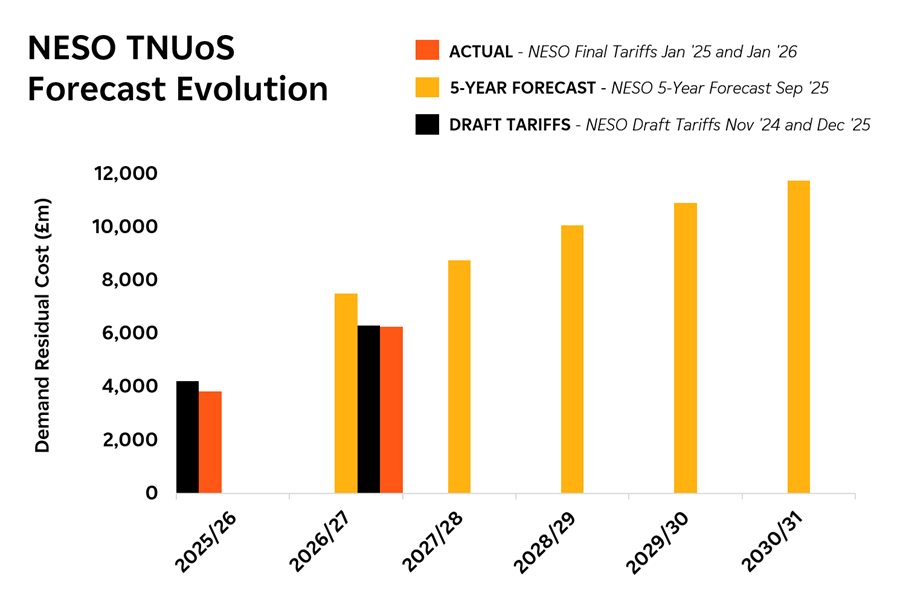
The National Energy System Operator (NESO) has published the final Transmission Network Use of System (TNUoS) tariffs for 2026/27, confirming a sharp 64% increase in transmission network costs for large energy users in the UK from April 2026.
To help make sense of these changes, we’ve outlined the key information businesses need to know.
Key Headlines
- From April 2026, large energy users (businesses and public sector organisations) in the UK face a substantial increase in network costs to fund major upgrades to the UK’s electricity grid.
- The average £/MWh equivalent residual charge for 2026/27 is now ~£25.70/MWh, up from ~£15.70/MWh today – this represents an increase of roughly £10/MWh year on year.
- The final tariffs include a small reduction of ~£0.20/MWh compared to the draft tariffs published in December 2025. Whilst this small revision is welcome, the overall 2026 picture confirms a significant rate increase.
- TNUoS residual charges are recovered on standing charges (£/site/day) but are represented above as average £/MWh equivalents for ease of comparison across different sites where charges will vary
What is TNUoS?
Transmission Network Use of System (TNUoS) charges are levied by transmission companies to pay for carrying electricity from power stations through high voltage lines to the local distribution networks. These charges are used to fund the maintenance and upgrading of the transmission network.
- Some TNUoS charges vary by region, but the majority are recovered via standing charges that are the same nationally
- The level of the TNUoS standing charge is determined by the size of a site’s connection and the voltage at which they connect
- TNUoS currently makes up around 5% of consumer electricity costs, one of the larger items in energy bills
TNUoS charges are managed through price controls administered by Ofgem.
Why is TNUoS increasing?
With the transition from large, centralised generation assets to more distributed, smaller generators, particularly wind in Scotland and the North, there is a growing need to transport more electricity across the country. This requires more and bigger cables to enable the flow of power from where it is generated to where it is needed.
At the end of 2024, transmission companies published their business plans for RIIO-ET3, indicating a need to spend around £80bn over five years. That money will ultimately be funded via TNUoS charges on suppliers, although not all of it will be recovered immediately, with Ofgem deciding what is necessary and reasonable.
Next steps – how we’re supporting customers
EDF can help businesses, energy consultants and public sector organisations stay ahead by navigating these market changes and managing their exposure to rising network costs.
Our experts are analysing what this means for customers and are reaching out with tailored guidance and support.
If you have any questions regarding TNUoS or would like to know the different options and support available, please reach out to your account manager.
As always, our team will continue to monitor regulatory developments and support customers in navigating the changing cost landscape. For a deeper diver into market changes, join our upcoming webinar Monitor: Non-Energy Costs Explained on Wednesday 17 March at 1 pm.
Related articles

Do you believe in life after ROCs?

Powering the UK's digital future: getting data centre connections reform right
