EDF's Role in the NESO Clean Power 2030 Vision
Accelerating the UK's Clean Energy Transition: EDF's Role in the NESO Clean Power 2030 Vision
The National Energy System Operator (NESO) recently released its Clean Power 2030 (CP30) report, commissioned by the Secretary of State for Energy Security and Net Zero. The report outlines ambitious yet achievable pathways to deliver a 100% clean power system by 2030. To succeed, the energy sector will need a five-fold increase in system flexibility, requiring innovations like demand-side response (DSR), battery storage, smart charging, and vehicle-to-grid (V2G) technologies.
EDF’s Commitment to a Flexible, Low-Carbon Future
EDF fully recognises the ambitious targets set by NESO and is dedicated to enabling a flexible, low-carbon energy system. With the ongoing expansion of renewables, flexibility will be crucial in overcoming intermittency and capacity challenges. At EDF, we share this vision and are equally committed to collaborating with stakeholders to ensure clean power delivery in the UK. By leveraging our strengths in battery optimisation, demand flexibility and low carbon investments, we are poised to contribute significantly to the UK’s clean energy goals, ensuring resilience and affordability for consumers.
Supporting Battery Customers Amid Rapid Growth
NESO projects that reaching clean power by 2030 will require over £40 billion in annual energy infrastructure investment. This includes scaling up offshore wind (from 15 GW to 50 GW), solar (from 15 GW to 47 GW), onshore wind (from 14GW to 27GW), and battery storage (from 5 GW to over 22 GW).
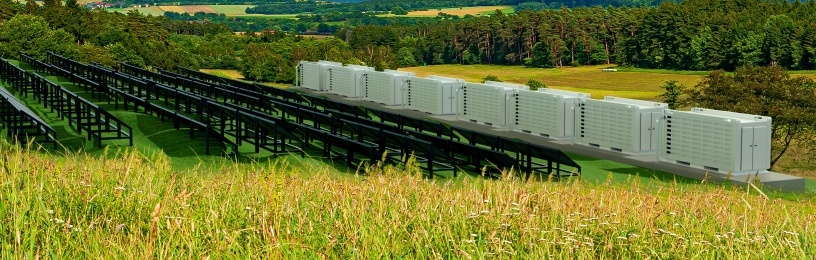
With NESO targeting up to 22 GW (or 27GW, subject to the scenario) of battery storage capacity by 2030, this presents a significant opportunity for battery developers and financers. As renewable generation increases, battery systems will play a crucial role in balancing the grid and maximising revenues through wholesale trading and the Balancing Mechanism. EDF’s expertise in battery optimisation ensures that our customers can navigate this rapid market expansion while supporting the UK's clean energy goals.
There are already more battery projects in the pipeline than the desired capacity, with batteries currently being one of the most oversubscribed technologies in the connections queue. This indicates a strong market appetite, but also highlights the need to overcome hurdles related to connection delays and economic barriers.
EDF sees an untapped opportunity to further utilise the BESS market. With a focus on levelling the economic playing field, batteries can be optimised to support not only short-duration storage but also play a key role in balancing the grid amidst growing renewable penetration. However, to truly unlock their potential, market reforms must address challenges like skip rates and ensure that batteries are prioritised for connection and deployment.
EDF’s Wholesale Market Service plays a crucial role in supporting battery developers and partners in navigating this rapidly evolving sector. By providing access to real-time trading and market services, we help battery operators maixmise their returns across diverse revenue streams. Drawing on our deep expertise in battery optimisation, we support our partners in making the most of opportunities available through the Balancing Mechanism, Wholesale Market, Ancillary Services, and local flexibility markets. This approach ensures that battery assets are effectively integrated into the grid, enhancing both financial performance and grid stability.
Addressing Grid Connection Challenges
One of the biggest challenges is the congestion in the current network connection queue. With over 750 GW worth of projects across the energy space vying for access, many battery projects face lengthy wait times, impacting their financial viability and slowing down the clean energy transition. EDF sees an opportunity to address these challenges through better alignment of battery storage projects with national clean energy objectives and that prioritising battery storage, will be essential for achieving grid flexibility and stability as renewable penetration increases. Addressing bottlenecks, reducing speculative project hold-ups, and creating clear incentives for high-impact projects are crucial to ensuring that the UK’s clean power objectives are met efficiently.
As a leader in battery optimisation, EDF is ready to support NESO in this endeavour, leveraging our expertise in flexible assets to drive the UK's clean energy transition.
Unlocking the Potential of Demand Flexibility
NESO projects that electricity demand may rise by around 11% by 2030. By leveraging energy efficiency measures and smart technologies, flexibility levels could grow 4-5 times, driven by initiatives like smart vehicle charging, time-shifting household energy use, and enhancing industrial responsiveness. Additionally, storage heating could contribute up to 4 GW of flexibility. NESO's upcoming Routes to Market Review for Demand Side Flexibility will detail strategies to ensure that demand-side resources are appropriately rewarded, encouraging wider adoption of these critical solutions.
This focus on demand flexibility presents a significant opportunity for EDF to support customers in optimising their energy use and costs, contributing to a resilient and decarbonised energy system.
Maximising Market Potential with EDF's Flexibility Solutions
EDF is fully supportive of the amount of focus CP30 pays to the need of unlocking flexibility on the demand side. EDF is already leveraging its expertise to unlock the potential of the UK battery market and energy flexibility solutions. Through our Virtual Power Plant (VPP) PowerShift capability, we optimise assets like EVs, batteries, and demand-side response into a cohesive network. This allows both residential and business customers to actively participate in energy markets, balancing the grid while maximising revenue streams.
As the largest battery optimisation provider in the UK, EDF utilises real-time trading, data insights, and 24/7 market monitoring to enhance returns. Our VPP integrates both domestic and industrial assets, supporting grid stability and helping the UK transition to a low-carbon future. By combining wholesale market participation, the Balancing Mechanism, local flexibility markets and the Capacity Market, EDF ensures that businesses and consumers can benefit from cost-effective, sustainable energy management.
Through strategic partnerships, such as with PodPoint for optimised EV charging, and innovative demand-side flexibility initiatives, we empower customers to reduce costs, earn new revenues, and contribute to net-zero goals.
What’s Next?
Moving from CP30 Plan to real-world implementation will require a close partnership between government, local stakeholders/communities and industry participants. EDF actively engages with industry and government on the matters addressed in CP30 and commits to furthering its collaboration with stakeholders to ensure that flexibility, renewables, and nuclear are fully leveraged to build a sustainable, decarbonised energy future.
The UK Government is expected to release a detailed response to NESO’s report by the end of 2024, setting the foundation for further initiatives like the Strategic System and Economic Plan (SSEP) and grid connection reforms. By March 2025, NESO plans to align its Operability Strategy with the 2030 clean power objectives, paving the way for a decarbonised energy system.
Related articles

Do you believe in life after ROCs?

Powering the UK's digital future: getting data centre connections reform right
