Hinkley Point C gears up for summer of heavy lifting
Hinkley Point C is getting ready for another spectacular engineering feat with the precision placement of 5,000 tonne cooling-water intakes on the seabed.
Four times longer and twice as high as a double-decker bus, each intake head will be connected to five miles of tunnels used to circulate cooling-water for the new power station.
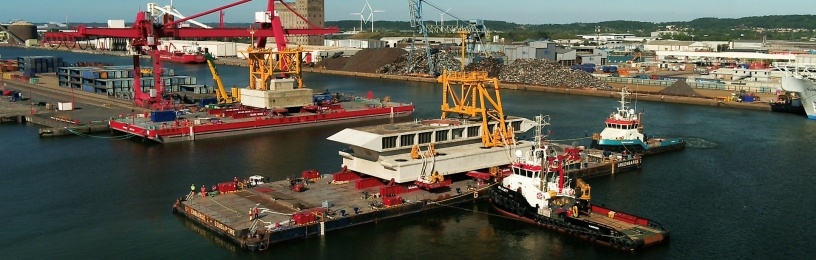
The first heads have been carefully loaded onto barges at Avonmouth, ready to be towed out to meet two floating heavy lift cranes “Gulliver” and “Rambiz” which will work in tandem to lower the structures into place. Each platform is the size of a football pitch and the cranes have a combined lifting capacity of 7,300 tonnes.
The four “intake” and two “outfall” heads have been built by Balfour Beatty in Avonmouth. Each “loading out” operation, carried out by lifting specialists Mammoet, takes several hours, with the water levels being adjusted at the dock, to ensure the barge can receive the load safely and securely.
Ian Beaumont, Project Director Marine Civils at Hinkley Point C said: “This starts a summer of complex offshore operations, with teams working in collaboration to deliver an incredible feat of engineering. It demonstrates the continued progress being made at Hinkley Point C.”
XXX at Balfour Beatty said: “XXXXXXXXXXXXXX”
The structures will cap the tunnels which will supply Hinkley Point C’s two nuclear reactors with cooling water. The heads are big for a reason. Their size means water will enter the intakes slowly, reducing the number of fish entering the cooling pipes. They are also placed sideways to the tidal flow. In addition, screens and a fish return system will transfer fish back to sea.
Hinkley Point C will be the first power station around the Bristol Channel to have fish protection measures in place.
Hinkley Point C gears up for summer of heavy lifting
Hinkley Point C is getting ready for another spectacular engineering feat with the precision placement of 5,000 tonne cooling-water intakes on the seabed.
Four times longer and twice as high as a double-decker bus, each intake head will be connected to five miles of tunnels used to circulate cooling-water for the new power station.
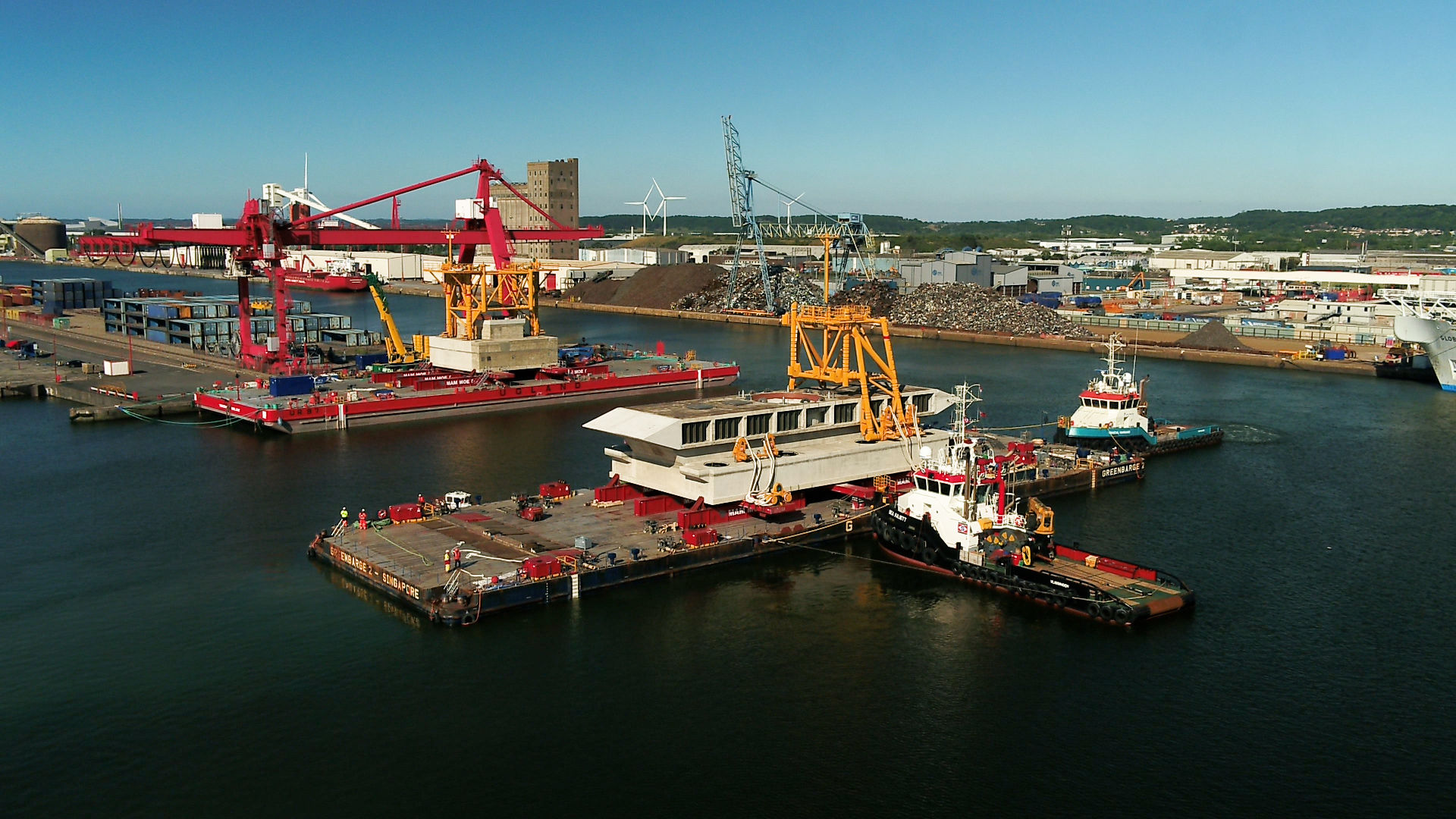
The first heads have been carefully loaded onto barges at Bristol Port’s Avonmouth docks, ready to be towed out to meet two floating heavy lift cranes “Gulliver” and “Rambiz” which will work in tandem to lower the structures into place. Each platform is the size of a football pitch and the cranes have a combined lifting capacity of 7,300 tonnes.
The four “intake” and two “outfall” heads have been built by Balfour Beatty in Avonmouth. Each “loading out” operation, carried out by lifting specialists Mammoet, takes several hours, with the water levels being adjusted at the dock, to ensure the barge can receive the load safely and securely.
Ian Beaumont, Project Director Marine Civils at Hinkley Point C said: “This starts a summer of complex offshore operations, with teams working in collaboration to deliver an incredible feat of engineering. It demonstrates the continued progress being made at Hinkley Point C.”
Roger Frost, Project Director at Balfour Beatty, said: “Today marks yet another exciting milestone in the construction of Hinkley Point C with the arrival of some of the largest heavy lift vessels in the world, on site. We are now readying ourselves to successfully complete our next feat of engineering: lowering the head structures, which will support the nuclear power station's critical water-cooling system, to the very bottom of the Bristol Channel.”
The structures will cap the tunnels which will supply Hinkley Point C’s two nuclear reactors with cooling water. The heads are big for a reason. Their size means water will enter the intakes slowly, reducing the number of fish entering the cooling pipes. They are also placed sideways to the tidal flow. In addition, screens and a fish return system will transfer fish back to sea.
Hinkley Point C will be the first power station around the Bristol Channel to have fish protection measures in place.
Related articles

We are Here to Listen: How to Get in Touch with Hinkley Point C

How is Hinkley Point C benefiting the local community?
