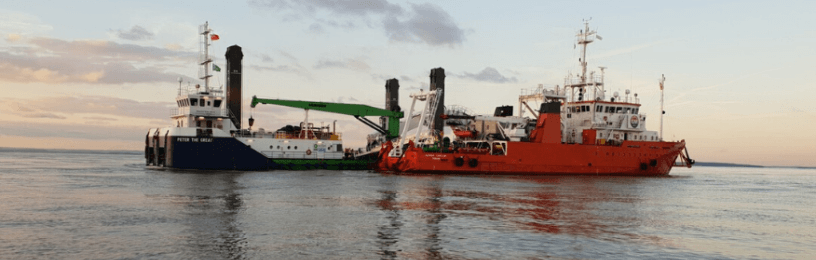
Update on Hinkley Point C mud dredging
Hinkley Point C has decided to carry out a full environmental impact assessment (EIA) as part of its licence application to dispose of mud dredged in the Bristol Channel. This is in addition to a testing plan approved by Natural Resources Wales which goes above and beyond internationally recognised best practice. Hinkley Point C has decided to carry out the EIA in order to provide the public with further reassurance that all concerns have been addressed.
A licence is required for the planned second phase of dredging off the Somerset site and disposal of mud at the Cardiff Grounds disposal site. Further dredging is needed before placing of the Low Velocity Intake Heads, drilling of shafts for the cooling water system, the installation of a fish recovery and return system and maintenance dredging at the jetty.
Previous testing has shown that this mud is no different to mud found elsewhere in the Bristol Channel and is not classed as radioactive under UK law. Hinkley Point C wants to reassure the public of the safety of this activity and has listened carefully to the concerns and questions that were raised during the first phase of dredging activities.
Hinkley Point C has commissioned CEFAS, the UK Government's marine science experts, to undertake analysis on further sediment samples following approval of the sampling plan, which was subject to public consultation. CEFAS has some of the most advanced radiation testing equipment in the world.
Chris Fayers, head of environment at HPC, said: "For this second phase of dredging, we intend to go further than normal regulatory requirements in order to provide the public with additional reassurance. We have proposed a testing plan that goes above and beyond internationally recognised best practice, with more samples at greater depth and with a greater range of analysis - including tests for pure alpha emitting particles and tritium.
"We also intend to conduct a full Environmental Impact Assessment as part of our disposal licence application. We believe it is right to go beyond technical arguments to provide the necessary public confidence that all concerns have been addressed."
No dredging activity is planned until 2021 and will require approval of the testing plan, analysis of the results, an application being made, and a licence issued.
More information on the dredging can be found here
Related articles

We are Here to Listen: How to Get in Touch with Hinkley Point C

How is Hinkley Point C benefiting the local community?
