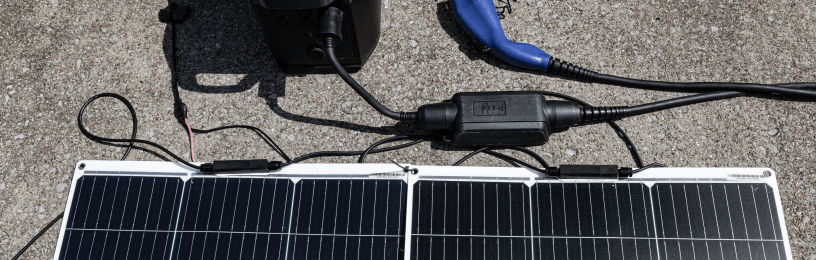
What are plug-in solar panels and how do they work?
Since the beginning of 2026, the UK has seen a big jump in solar panel installations. Almost 172,000 systems have been installed across the country, with most on rooftops. In July, over 70% of these new installations were rooftop solar panels.(1)
Recent news highlights the emergence of plug-in solar panels as more people adopt solar technology. What will the launch of plug-in solar mean?
Our guide explains what plug-in solar panels are, how they compare to rooftop solar, and why they might not be as simple as they seem at first.
If you're thinking about solar energy, check out our solar panels to see what options are available for your home.
Topics covered in our blog
How do plug-in solar panels work?
Are plug-in solar panels legal in Great Britain?
Why are plug-in solar panels attracting so much attention?
Are plug-in solar panels safe?
How much do plug-in solar panels cost?
Can you get plug-in solar with a battery?
Can plug-in solar panels power an entire home?
Are plug-in solar panels suitable for renters?
What do many people not realise about plug-in solar?
Are plug-in solar panels worth it?
What are plug-in solar panels?
Plug-in solar panels are small systems that generate electricity for your home. Many people see them as a quick and easy way to produce your own electricity. You buy a kit, plug it in, and start generating solar energy. Although it sounds simple, it's important to understand whether they'll meet your needs.
Most basic plug-in systems include:
- One or two solar panels
- A small inverter
- Mounting equipment
- Connection cables
They are usually designed to be positioned in places such as:
- Gardens
- Patios
- Balconies
- Outbuildings
Like traditional solar panels, they convert sunlight into electricity during the day. The main difference is scale. Plug-in systems are usually much smaller than rooftop solar setups, so they tend to make less electricity.
How do plug-in solar panels work?
Plug-in solar panels work like traditional rooftop solar panels. When sunlight hits the solar cells, they produce electricity. You can then use this electricity to run appliances in your home.
However, generation depends on several factors:
- The size of the system
- How much sunlight reaches the panels
- The time of year
- Weather conditions
- Where the panels are positioned
This can be tricky with plug-in solar systems. It's not always easy to find the right spot, especially if you have a small home or have limited outdoor space. Learn more about how solar panels work.
Are plug-in solar panels legal in Great Britain?
Yes, plug-in solar panels are now legal in Great Britain as long as they meet the right standards. They are not legal in Northern Ireland right now.
Under G98 arrangements, notification is generally required within 28 days of commissioning.
Not all plug-in solar products you find online meet these standards, so check the details before you buy and always follow the manufacturer's instructions.
Before buying, check that you have a suitable, unshaded location and can secure the panels safely. If you rent, live in a leasehold property or share responsibility for the building exterior, check whether you need permission from your landlord, freeholder or building manager.
The government has updated wiring regulations, legally limited to a maximum of 800W AC inverter output to be safely plugged into domestic sockets without an electrician. Always follow the product instructions. And if you’re unsure about the socket or home wiring, ask a qualified electrician.
Why are plug-in solar panels attracting so much attention?
Many people want to reduce their reliance on grid electricity. Plug-in solar has attracted interest because it can appear to offer:
- A lower upfront cost
- Simpler installation
- Greater flexibility
- An option for homes that can't install rooftop solar panels
However, it's important to know how much electricity a plug-in system can actually make and if that fits your household's needs.
Before you invest, make sure you understand both the benefits and the limits, and check that you have a suitable, unshaded location and can secure the panels safely.
We asked Martin Aylward, Head of Zero Carbon Homes at EDF, for his view
The move to enable compliant plug-in solar is a welcome step because it will help more households engage with clean, homegrown energy, particularly where traditional solar has not been practical. But for homeowners with a suitable roof, professionally designed and installed rooftop solar will usually deliver far greater generation, stronger long-term savings and better integration with batteries, EV charging and smart tariffs. At EDF UK, through our subsidiary Contact Solar, our focus remains on helping customers get the most from high-quality rooftop solar systems rather than entering the plug-in solar market.
Martin Aylward: Head of Zero Carbon Homes
Are plug-in solar panels safe?
Like any electrical product, use plug-in solar panels according to the manufacturer's instructions. Before buying a system, it's worth checking:
- Product certification information
- Warranty details
- Installation guidance
- Maintenance requirements
- Whether the product is designed for use in Great Britain
Not all products you see online are the same. Taking some time to learn what's involved can help you make a better decision. If you're not sure, ask a qualified professional for advice.
Electrical Safety First has more safety advice.
How much do plug-in solar panels cost?
One of the biggest attractions of plug-in solar is the lower upfront cost compared with a traditional rooftop solar installation.
But the upfront price is only part of the picture.
It's also worth considering:
- How much electricity the system is likely to generate
- How suitable your property is
- How much space you have for them
- Whether you'll need additional equipment
- The long-term value of the system
- How you'll manage the electricity you generate, making sure you're able to use it all
A cheaper system might not give you the results you want if it doesn't make enough electricity. For more information, see our guide to solar panel costs.
Can you get plug-in solar with a battery?
Current rules say you can't connect your plug-in solar system to a solar battery. This means you have to use the electricity as it's generated. Since your panels mainly produce power during the day, you should run your large home appliances then. Otherwise, the electricity will flow back to the grid.
A battery can store some of the electricity generated during the day for later use. If you're interested in storing solar energy. View the latest changes in solar battery standards.
Can plug-in solar panels power an entire home?
For most homes, the answer is no.
Plug-in solar systems are generally designed to contribute towards household electricity use rather than meet all of it. The amount of electricity generated depends on the system size and the conditions where it's installed.
If your goal is to generate a larger proportion of your home's electricity, a traditional solar installation will likely offer greater generation potential, especially when paired with a solar battery. Read our solar installation guide.
Are plug-in solar panels suitable for renters?
If you live in rented accommodation, discuss any plug-in solar installations with your landlord. Bear in mind:
- Available outdoor space
- Building restrictions
- Tenancy agreements
- Landlord permissions
- Suitable positioning
Because of these factors, plug-in solar might not work for every rental property.
What do many people not realise about plug-in solar?
Plug-in solar panels are often marketed as a simple way to generate your own electricity. But in reality, things can be more complicated.
Before buying a system, it's worth thinking about:
- Whether you have enough suitable outdoor space
- How much direct sunlight the panels will receive
- Whether the electricity generated is likely to meet your expectations
- Any permissions or approvals that may apply
- How the system compares with other available solar options
For some households, plug-in solar may be a useful way to start generating renewable electricity.
For many homeowners, however, the biggest limitation is size. Smaller systems generally produce less electricity. That's why it's important to look past the headlines and focus on what a system can actually do for your home.
Are plug-in solar panels worth it?
It really depends on your home, how much energy you use, and what you expect.
Plug-in solar may be suitable if:
- You want to generate a small amount of your own electricity
- You have limited options for rooftop solar
- You want to explore solar with a smaller upfront investment
However, many homes use much more electricity than a small plug-in system can provide. That's why you should consider your goals before choosing a solar option.
Plug-in solar panels vs rooftop solar panels
The table below shows the main differences between the two systems.
| Plug-in solar | Roof solar | |
|---|---|---|
| System size & output | Legally limited to a maximum of 800 W AC inverter output (usually 1 to 2 panels). | Ranges from 3.5 kWp to 10 kWp (6 to 24 panels), depending on your roof size. |
| Installation | You don't need an installer, but you must notify your Distribution Network Operator (DNO) before use. | Professional mounting, scaffolding, and electrical work are required for safe installation. |
| Cost & VAT | Roughly £300–£1,000, depending on the kit, plus 20% VAT. | Professionally installed rooftop solar benefits from a 0% VAT rate, though total system costs are higher. |
| Financial savings | The government estimates that you could save up to £110 a year with a standard 2-panel setup | Savings vary depending on how many panels you have. Homes with rooftop solar panels can also save more through Smart Export Guarantee tariffs by selling excess electricity back to the grid. The Energy Savings Trust gives more info on potential savings by region, including SEG/non SEG set up |
| Export & Storage | Currently, you cannot use a battery alongside your system. This means you can't export extra electricity or earn money through Smart Export tariffs. | Rooftop installations can easily incorporate batteries, which enhances their ability to save energy and earn from export tariffs. |
Roof solar panels may offer more flexibility and savings despite the initial cost. We cover all your questions in our solar panel cost guide. Households in England looking to improve their home's efficiency could be eligible for solar panels as a package of energy efficiency measures through the Warm Homes Local Grant.
A balanced view on plug-in solar
Plug-in solar panels help more people learn about solar energy and may suit some households. However, it's important to understand how much electricity a system can produce before deciding. The best option depends on your property, budget, and energy goals. These panels have sparked important conversations about making solar energy more accessible.
For some households, they offer a way to generate renewable electricity at home. But you should consider practical limits like available space, panel placement, and expected electricity output before choosing plug-in solar. If you want to maximise electricity production over time, a traditional rooftop solar system might be a better fit.
Ultimately, the right choice depends on your home's characteristics, your financial situation, and your energy objectives.
If you're exploring solar, you can find out more about:
Or get a solar quote to see what could work for your home.
Get a free quote today
Related articles

Solar panel myths debunked: What's fact and what's fiction?

How do solar panels work?
