EDF AND NISSAN: V2G
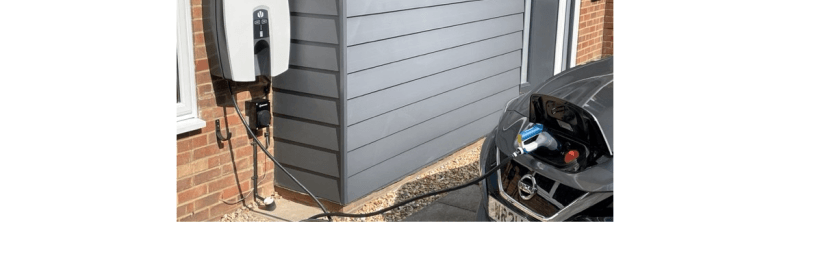
Bidirectional charging (V2X) allows a car to return energy to the grid or send it to your home or business. The number of vehicles capable of V2X is predicted to grow. Alec Aujla-Jones explains the challenges in manufacturing costs and installation and how the team are supporting Nissan in developing V2X propositions.
Bidirectional energy transfer in vehicles could make a positive contribution to future energy systems. Currently, the roll out is limited due to expensive manufacturing costs and complex installation.
Charger costs
To reduce the cost of the charger, Nissan have developed an AC (alternating current) charging system, with the inverter reinjecting power into the household circuit in the car. This is being tested with an electric vehicle at the University of Nottingham.
Installation process
To address the complex installation, EDF R&D and Nissan have investigated the process in the UK, as the University’s private grid is not representative of a customer’s home. The project involved mapping the installation process, assessing household suitability for the V2X and submitting an application to connect the equipment to the Distribution Network. Potential improvements to household energy supply have been identified and we have estimated the installation costs. If the trial this autumn shows that the V2X system is robust and can create value, V2X charger propositions can be developed.
Next steps
Following the project, which completed in June, Nissan have asked for similar studies across Europe and EDF R&D is planning to support the future development of Nissan’s V2X proposition in the UK.
Public launch
Nissan have announced that they will be launching their on-board bidirectional charging system on selected vehicles from 2026, following its successful grid certification. EDF, Dreev (an EDF subsidiary specialising in the optimisation of EV charging), and ENovates (the manufacturer of the wall box, the part of the charging system outside of the EV) supported this during an October press release at the Nissan Research Centre.
Related articles


Leveraging AGR know-how for AMR success
