NEW VIDEO: Hinkley Point C in 2025

By Hinkley Point C media team | Posted December 08, 2025

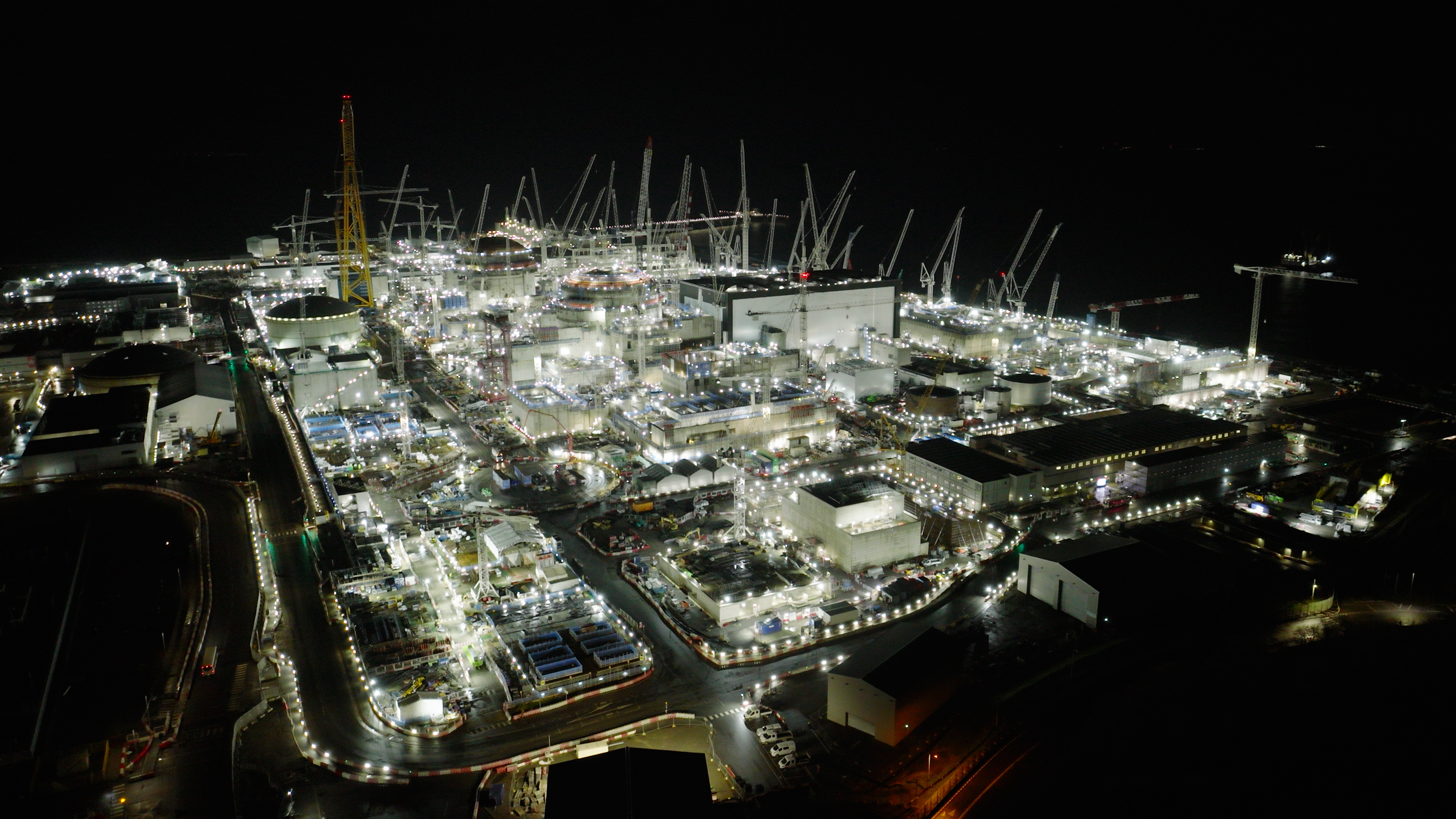
Hinkley Point C has today unveiled its End of Year film, offering a rare glimpse into the work that happens after dark on Britain’s biggest infrastructure project.

In the video, Project Construction Director Rob Jordan takes viewers behind the scenes of the night shift that keeps the site moving 24/7.

14,000 people are working around the clock to deliver Britain’s first nuclear power station in more than 30 years. 4,600 companies from across Britain have also played their part and stand ready to deliver future projects like Sizewell C.

Some of the project's most impressive milestones happen at night. In July, the world’s largest crane, Big Carl lifted the 245-tonne domed roof onto the second reactor building. Four huge Steam Generators have also been installed, ready to use heat from the reactor to drive the Arabelle turbine.

With most buildings complete across the site, focus has shifted to the task of fitting them out with thousands of pipes, cables and critical systems that will bring the station to life. Every night, construction teams keep progress on track - supported by catering, cleaning and emergency response crews who keep them safe.

Rob Jordan sums it up: “This site never sleeps - just like the power station when it’s finished. Our electricity will power Britain around the clock for decades to come. Night and day, winter to summer, rain or shine. Together, we’re building an Electric Britain.”

When complete, Hinkley Point C will generate enough low-carbon electricity to power 6 million homes for 60 years, helping secure Britain’s energy future.

Downloads

Hinkley Point C’s End of Year film joins the night shift at the country’s biggest energy project – where thousands are working around the clock to Build an Electric Britain.
Some of the project’s most impressive milestones happen at night. In July, the world’s largest crane, Big Carl lifted the 245-tonne domed roof onto the second reactor building
14,000 people are working around the clock to deliver Britain’s first nuclear power station in more than 30 years.
With most buildings complete across the site, focus has shifted to the task of fitting them out.
Hinkley Point C will generate enough low-carbon electricity to power 6 million homes for 60 years.

Related articles

HPCDOMELIFT
March 24, 2026

EDF announces leadership changes in its UK nuclear businesses

EDF has named Mark Hartley as the next Chief Executive Officer of the Hinkley Point C nuclear project from 1 July. His appointment comes as current CEO Stuart Crooks steps down from the role after 40 years of service in the nuclear industry.
tunnel boring machine
March 13, 2026

Engineers at Hinkley Point C are ready to start tunnelling the fish return system

Engineers at Hinkley Point C are ready to start tunnelling the second of three fish protection measures at the nuclear power station. The fish return system will be 620m long and 1.8m in diameter.
Sea trials have shown that a new acoustic fish deterrent developed for Hinkley Point C is highly effective.
February 10, 2026

Trials show that Hinkley Point C’s Acoustic Fish Deterrent is Highly Effective 

Sea trials carried out by Swansea University have shown that an acoustic fish deterrent developed for Hinkley Point C is highly effective. The innovative use of ultrasound technology has been shown to keep target fish species away from the power station’s water intakes.