Enabling clean energy through smarter, proportionate nuclear regulation
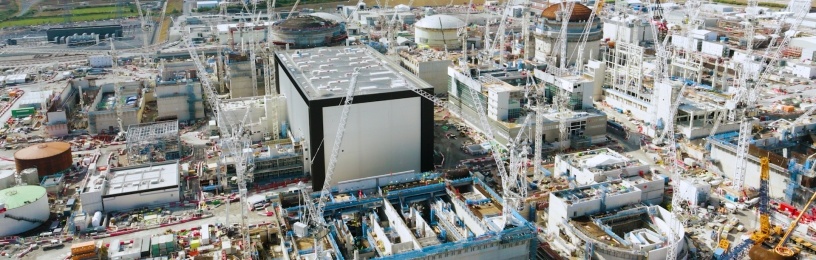
The nuclear renaissance feels more real than ever. With construction of Hinkley Point C well underway, Sizewell C construction commencement and recent announcements about plans to develop AMR and SMR projects across the country, momentum is building. Rising demand for clean, round-the-clock energy, driven by datacentre expansion and the electrification of the economy underpin this ambition. The real challenge comes when turning this ambition into reality.
Regulation has long been a critical element to the deployment of nuclear in the UK, alongside other factors such as siting policy and financing. Regulation is crucial to the safe deployment of nuclear and getting the balance right so that the demands of regulation are proportionate to the risks posed by the technology it regulates, is a challenging task. Thankfully, it’s an area where the UK has led the world for decades and can continue to do so.
Recognising the importance of effective regulation in supporting the delivery of new nuclear, the Government made the positive move to launch the Nuclear Regulatory Taskforce earlier this year. Its remit is to examine all aspects of civil and defence nuclear regulation, exploring how safety, environment, planning, and other relevant areas can be maintained or improved with the aim of supporting energy security, national security, and economic growth. Ultimately, and crucially, being able to build nuclear power plants quickly and efficiently will lower the cost of energy, for households and businesses.
The report assesses whether the UK’s nuclear regulatory system is fit for purpose as the country embarks on a major expansion of civil and defence nuclear programmes, an example being the recent UK-US deal on energy security. X-Energy and Centrica, for example, have plans to build up to 12 advanced modular reactors in Hartlepool, followed by a UK-wide delivery programme which could deliver £40bn in economic value to the UK economy. The report aims to identify potential opportunities for streamlining regulation to enable faster, more cost-effective delivery, without ever compromising on safety. This is an objective that EDF has long supported and has been working with the respective regulators for many years to navigate.
In this spirit, we have welcomed government’s attention on this area and believe the independent review is well-timed. Drawing on our unique position in the UK as both a nuclear operator and developer, we have been feeding into the work of the Taskforce directly. But given the level of attention on regulatory reform in the public domain, we wanted to set out how we see that the work of the Taskforce could help regulation evolve to support safe, timely, and cost-effective nuclear deployment.
When it comes to delivery of nuclear projects, how can regulation help?
As part of its interim report, the Taskforce noted that the UK’s strong safety record and respected regulatory institutions are widely acknowledged, but a “once-in-a-generation” reset is needed to ensure the system supports the delivery of nuclear projects in a fast-changing, global energy landscape.
The report identifies several issues impacting progress in the nuclear sector:
- There is a need to ensure that risk management is proportionate across both nuclear regulation and the environmental assessments.
- Regulation can be complex and inconsistent, with processes duplicated across overlapping regulators.
- The planning framework doesn’t support innovative technologies such as small and advanced modular reactors.
- There are concerns around scarce regulatory expertise and the need to maintain a range and depth of expertise across the workforce.
- There is a need for greater standardisation across international regulators, which could cut down complexity, costs, and delays when seeking approvals.
- There needs to be better understanding of the cost of project delays to ensure that regulatory measures are proportionate.
These are challenges that EDF is familiar with, and we agree that these are the right areas for any Government action to focus on. But as the Taskforce also sets out, it’s important that there is recognition of the need to retain what works well, particularly in relation to core regulation.
We support the Taskforce’s finding that the UK’s goal-setting approach to nuclear regulation allows for adaptability and enables innovation – effectively focusing more on the outcomes that regulation itself is seeking to achieve. We also agree with the Taskforce finding that it is how the regulation is applied where there is scope for improved outcomes in nuclear delivery. As new approaches and technologies develop, this approach will have to continue to develop – a point that we believe is understood within the regulatory system.
From our own experience of this enabling approach by the ONR there are good examples including establishing the innovative Nuclear Services Company to protect and enhance critical UK nuclear skills or the framework to support lifetime assessments for the existing AGR fleet.
Balancing protection and progress - the case for further reform of environmental regulation
Beyond core nuclear regulation, the Taskforce also rightly points out that there is a case for changing the approach to environmental regulation.
Environmental protection is essential, but it must be more effectively balanced where developments themselves will deliver a significant environmental gain, such as the clean power generated for decades from nuclear power stations.
Our experience with the acoustic fish deterrent at Hinkley Point C shows how environmental regulations can create major obstacles. Despite very limited evidence of harm, we faced six years of regulatory delays and proposals for compensation caused material public concern and opposition. Hinkley Point C now has more fish protection measures than any other power station in the world, costing over £700 million.
The application of the Habitats Regulations was a particular challenge in this case. We believe that regulation based on proportionality and scientific thresholds, including shifting the burden of proof and allowing more flexible compensation, could have led to a more balanced and efficient outcome.
Effective environmental regulation will therefore be another key to unlocking a regulatory setting for delivering new nuclear. Noting that there has also been some progress in this space already, there are some areas where things could evolve further, for example:
- Reforming the planning and environmental legislation for new clean energy projects. The Habitats Regulations specifically must be applied proportionately, as well as there being a need to embed a science-led and more common-sense approach. Action could be taken quite quickly, such as via the Planning and Infrastructure Bill. The amendments proposed under Schedule 6; Amendment 350 would offer meaningful improvements to how the environmental impacts of projects are assessed and compensated.
- Designating a lead environmental regulator. To reduce duplication and improve decision-making – there could be value in empowering a lead environmental regulator as the control for environmental decisions. Progress is already being made within the environmental regulatory bodies to adapt how responsibility falls, a trend that EDF strongly supports.
Given the urgency to deliver new nuclear projects, is something more radical required?
Given all but one of our existing nuclear power stations are due to close by 2030, it’s right that the Taskforce is also considering whether a more radical change in approach is needed. We welcome such thinking but are aware that any significant changes would have to be balanced with the risk that substantive reform often takes time.
In considering whether further action is required, the first area to consider could be something more radical on environmental regulation. Building on the ideas set out above, there could be a case for looking again at the wider governance framework. For example, the Secretary of State for Energy Security and Net Zero could be empowered with targeted exemption powers for major clean energy projects, inclusive of nuclear, under the Habitats Regulations. This could allow more practical oversight and discretion in decisions that make sense on a large scale, given the trade-offs.
This move would reflect the widely accepted strategic importance of nuclear energy’s long-term environmental benefits. By enabling national-level decisions that prioritise clean power projects, the UK could accelerate delivery without compromising outcomes. Thought would have to be given to the legal and practical implications of a wider change in approach.
Beyond environmental regulation, there is also value in looking at the issue of how we best align our approach to regulation in the UK with the rules in other markets. As was highlighted during the recent US State Visit, and given the nuclear renaissance is happening globally, there could be a case for looking again at how we align our approach to regulating technologies that are being deployed in mature nuclear markets around the world.
The Taskforce could consider deeper alignment with global technical standards, provided UK safety remains paramount. Streamlining regulatory dialogue and embracing equivalence with trusted international norms could eliminate duplication, reduce prescriptiveness, and open the door to proven innovations. Early engagement on safety justifications and a sharper focus on how regulatory decisions affect delivery timelines could help contain costs and mitigate risk as we look to deploy a wider range of technologies in the UK.
And what needs to happen beyond regulation?
Regulatory reform is an important step in accelerating the development of nuclear power, and the Taskforce’s work will play a key role in shaping the UK’s ability to deliver clean and secure energy in an affordable way for consumers. Success means working closely with the key regulators to identify what remains robust in the existing regime, reducing complexity and easing the burden on developers where possible, while maintaining safety and effectiveness.
But regulation is just one element driving the nuclear renaissance in the UK. The Government will need to maintain momentum and continue to set out long-term ambition, ideally through an outlined deployment pathway for projects that are being developed outside of the formal GBE-N process. More specifically, urgent progress on siting is needed to create a pathway for new projects, including at non-nuclear licensed sites. And, as we look to secure investment from private sources to develop new projects, a defined approach to financing and contracting for new projects is a must.
There is also a need to consider how nuclear fits into the wider clean power journey that the UK is now on. The upcoming Strategic Spatial Energy Plan due next year will be vitally important in mapping out the prospective role that nuclear will play. There are also near-term opportunities, such as setting out a role for nuclear power in the development of new AI Energy Zones that government is looking to allocate to support the development of data centres powered by clean power.
The nuclear renaissance is alive and well. At EDF, we know that a robust and effective regulatory framework is key, but not sufficient on its own if we are to develop a nuclear sector that continues to power an electric Britain and create well-paid jobs right across the country.


Related articles

Why distribution network investment matters for affordability and energy security

What more needs to be done to tackle persistently high energy bills?
