Flash forward to a net zero future
EDF recently started work on five new trials exploring solar solutions for social housing, incentivised demand flexibility, and using electric vehicles and heat pumps for electric storage.
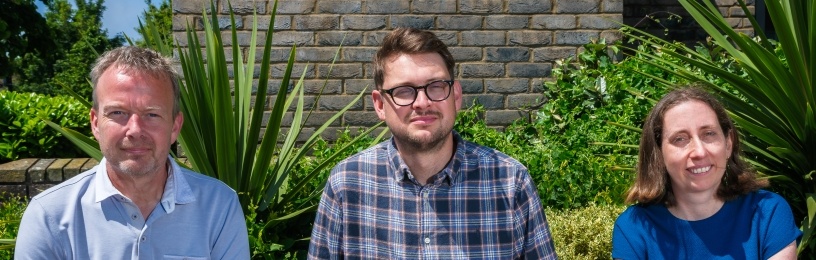
Rebecca Rosling, Head of UK R&D Future Energy Systems, Ian Holland, Commercial Performance Director in Retail, and Mark Askew, Solutions and Automation Director in Retail, explain how this set of innovative trials (called Project Flash) will help customers save cash and carbon.
How will Project Flash help us on our journey to net zero?
Rebecca: As the amount of energy supplied from fluctuating renewable sources grows, when we use energy will become as important as how we much we use. National and local grids will limit how much electricity can be used and when, so by encouraging our customers to shift demand away from peak times we can integrate more electric vehicles, heat pumps and renewables.
How have you been working together on Flash?
Mark: We all share the commitment to help Britain achieve net zero and the Flash project will play a part in working towards that ambition. We work together as one team with an agile mindset, all learning from each other.
What benefits does this collaboration bring?
Mark: As a country, we’re still in early stages of achieving net zero. Working together in this emerging space is essential; R&D can tell us in advance what’s coming and we can plan how to engage with our customers to ensure successful adoption. Technologies to support demand reduction are evolving quickly and our agile approach helps us to test, learn and adapt as we go.
Ian: Working together helps us to deliver faster by collaborating not just internally between Customers and R&D, but also with partners like Brighton and Hove City Council and KrakenFlex. The work we do now will help the energy transition as the market evolves.
There are 2000 customers involved in the trials. What is the general feedback so far?
Ian: Recruiting customers for the trials has been surprisingly straightforward – they’re genuinely interested, which is awesome. The ‘Beat the Peak’ offer has made the most significant progress and has received really positive feedback. Customers appreciate how it helps them understand their energy consumption patterns beyond just the quantity consumed. Interestingly, they seem to value the environmental impact (carbon savings) more than the financial rewards.
Mark: We’re working with Loughborough University to capture feedback to help shape our future propositions. As a learning organisation this helps inform DESNZ in any potential market interventions, allowing the country to learn from these innovative propositions too.
How does Flash help different types of customers?
Rebecca: Sunshine Saver supports tenants in social housing, who often get left behind. For Britain to achieve net zero, we need to make our offering accessible to people in all economic situations.
What are you most proud of and what are you excited about?
Rebecca: I’m proud that a small idea we started in R&D is now a fantastic team effort. I’m excited about the results from the trials and how we build them into our mass market propositions.
Ian: The team spirit and engagement has been great, people have been proactive which allows us to progress quickly. I’m excited about taking that feeling of autonomy into future projects.
Mark: We’re taking brave and bold decisions to do the right things to make us standout as an organisation. Flash is great, I’m excited to scale up these products to be used by millions.
Project Flash is part of the Department for Energy Security & Net Zero's Alternative Energy Markets Innovation Programme, and backed by £1.3m of funding from the Net Zero Innovation Portfolio (NZIP). NZIP is a £1 billion fund for low-carbon technologies and systems and aims to decrease the costs of decarbonisation helping enable the UK to end its contribution to climate change.
Related articles

EDF's Open Tariff APIs

