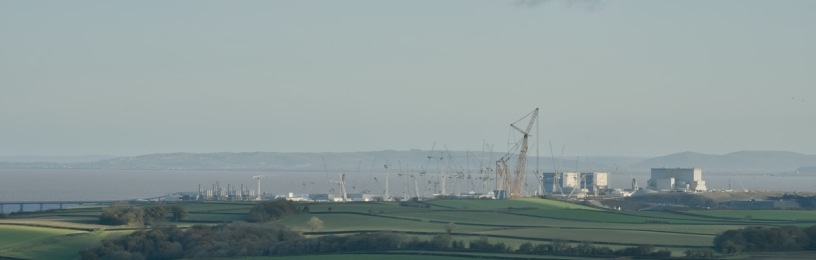
New study confirms Hinkley Point C’s low carbon credentials
New analysis has confirmed that CO2 emissions from the electricity generated at Hinkley Point C will be even lower than wind and solar power. All three technologies are essential in helping Britain achieve Net Zero and protecting the environment from the worst impacts of climate change.
Like renewables, nuclear power is ‘zero-carbon’ at the point of generation but, as with all electricity generation, CO2 is released during construction, operation, and decommissioning. A detailed and independently verified study into lifetime emissions at Hinkley Point C shows that emissions from generating electricity are likely to be around 5.5g CO2e eq/kWh for both Hinkley Point C and Sizewell C.
By comparison, offshore wind is around 12g CO2e eq /kWh and 48g CO2e eq /kWh for large-scale solar energy. All are drastically lower than coal at 820g CO2e eq /kWh and gas at 490g CO2e eq /kWh. A separate United Nations report published this month reached a similar conclusion.
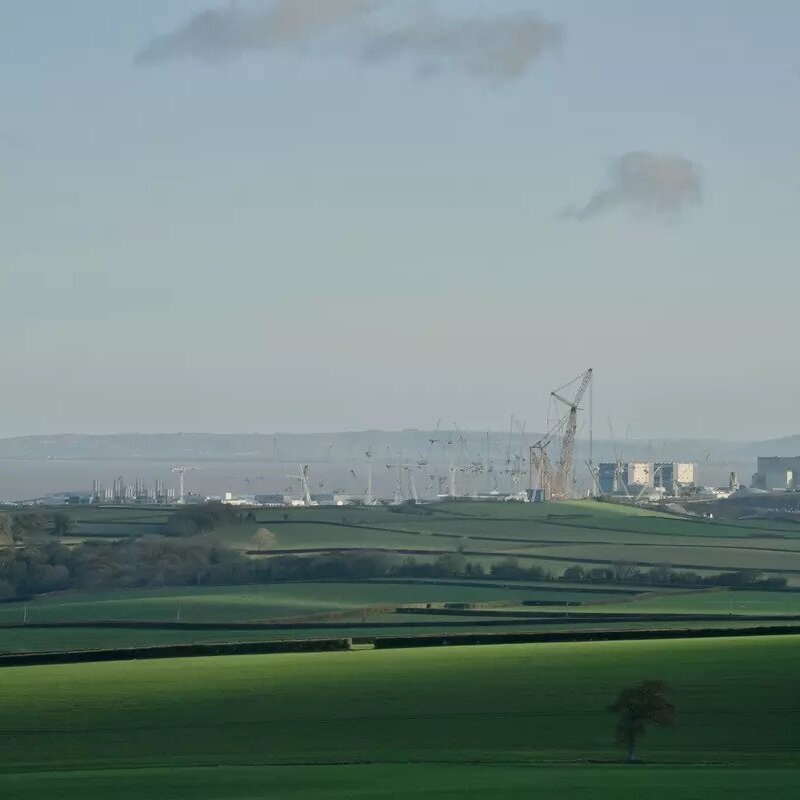
New study confirms Hinkley Point C’s low carbon credentials
New analysis has confirmed that CO2 emissions from the electricity generated at Hinkley Point C will be even lower than wind and solar power. All three technologies are essential in helping Britain achieve Net Zero and protecting the environment from the worst impacts of climate change.
Like renewables, nuclear power is ‘zero-carbon’ at the point of generation but, as with all electricity generation, CO2 is released during construction, operation, and decommissioning. A detailed and independently verified study into lifetime emissions at Hinkley Point C shows that emissions from generating electricity are likely to be around 5.5g CO2e eq/kWh for both Hinkley Point C and Sizewell C.
By comparison, offshore wind is around 12g CO2e eq /kWh and 48g CO2e eq /kWh for large-scale solar energy. All are drastically lower than coal at 820g CO2e eq /kWh and gas at 490g CO2e eq /kWh. A separate United Nations report published this month reached a similar conclusion.
The full report for Hinkley Point C is available here.
The project has also published details of its work to create a positive environmental impact.

Related articles

Hinkley Point C finishes tunnelling fish return system

We are Here to Listen: How to Get in Touch with Hinkley Point C
