
Energy Roundup: October 2026
Welcome to the latest issue of our Energy Roundup. Each quarter, we’ll bring you all the latest news, views and insights to help you navigate the ever-changing complexities of the energy industry.
Contents
- UK power and gas markets
- A brief outlook of non-energy costs
- BICS applications are now open
- Temporary VAT reduction for eligible electricity supplies
- Ofgem smart metering framework for non-domestic customers
- A view from our PPA Team: 3 Minute Brief: PPAs with Ross Irvine
Energy Overview
UK power and gas markets
As we move into the winter period, attention remains focused on European gas storage levels and the availability of global LNG supplies. Although storage levels have continued to build through the summer, they remain below those seen at the same point last year, leaving the market more exposed to periods of colder weather and potential supply disruption.
Global gas markets continue to be influenced by the aftermath of disruptions in the Middle East earlier this year. While LNG flows have improved following the easing of tensions and the gradual recovery of export infrastructure, supply remains tighter than pre-conflict levels and competition for cargoes remains strong, particularly as Asian demand increases heading into winter.
In the UK, gas prices remain a key driver of electricity prices, with gas-fired generation continuing to play an important role in balancing the system during periods of lower renewable output. At the same time, ongoing investment in renewable generation and grid infrastructure is supporting the transition to a lower-carbon power system, although market volatility remains a feature of the current landscape.
Looking ahead, market participants will be closely monitoring winter weather forecasts, European storage levels, and global LNG supply trends. Any prolonged cold weather, infrastructure disruption or geopolitical developments could place additional pressure on wholesale markets. While supply concerns have eased compared with earlier in the year, uncertainty remains and prices are likely to remain sensitive to market developments throughout the winter months
Power Market Update Webinar
Join James Chaplin for his regular Power Market Update webinar, where he'll explore the latest developments affecting UK power and gas markets and provide an outlook on future price trends.
Wednesday 28 October at 3pm
Register here

A brief outlook of non-energy costs
On Monday 21st September, the National Energy System Operator (NESO) published draft BSUoS tariffs for the 2027/28 charging year. From April 2027 to September 2027, the tariff is forecast to be £21.67/MWh, with a slightly lower tariff of £18.42/MWh from October 2027 to March 2028. This represents an increase of almost £8/MWh for the summer period and almost £6/MWh for the winter period compared to the current charging year. Final tariffs are expected to be confirmed by NESO in December.
NESO are significantly under-recovering revenue through their current BSUoS tariff relative to their current costs, especially when paying gas generators to increase output. This is mostly due to increased wholesale gas prices after disruption to global gas supplies from the Middle East conflict. NESO expects to have under-recovered by ~£1.1bn by the end of March, which will then be recovered on top of normal BSUoS costs through the April 2027 to March 2028 tariffs. Under normal circumstances this would make it likely that NESO would have to open up BSUoS tariffs during this charging year, but we understand they currently have access to sufficient working capital to wait to start recovering the money until April 2027.
On Friday 25th September, the Department for Energy Security and Net Zero (DESNZ) confirmed the proposed Renewable Obligation (RO) level for suppliers at 0.394 ROCs/MWh supplied in Great Britain, assuming the legislation required to implement the British Industrial Competitiveness Scheme is in place by April 2027.
This is in line with our expectations and represents a significant decrease from the level in the current charging year of 0.472 ROCs/MWh, as RO subsidies start to come to an end for earlier adopters of the scheme. RO rates won’t be final until 2026 inflation outturn is known in February, but this decrease means the RO supplier charge is likely to fall from £32.73/MWh this year to around £28/MWh from Apr 2027.
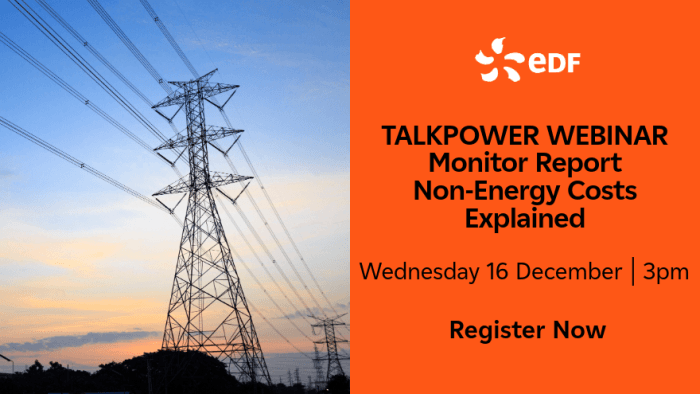
Monitor Report Non-Energy Costs Explained
Join our Wholesale Market Services experts as they share more detailed updates on how the current non-energy costs impact businesses - Taken from our quarterly report, Monitor.
Wednesday 16th December at 3pm
Register here
Energy in the News
This past quarter, we have seen many regulatory changes in the energy sector. Here are our top three:
BICS applications are now open
Applications for the British Industrial Competitiveness Scheme (BICS) are now open and close at 23:59 on 30 November 2026.
Announced as part of the Industrial Strategy, BICS is designed to reduce electricity costs for eligible UK manufacturers, helping improve competitiveness and support investment in British industry.
Eligible businesses will be exempt from the indirect costs of the Renewables Obligation, Feed-in Tariffs and the Capacity Market, delivering savings of up to £40/MWh from April 2027. Businesses that qualify will also receive an additional payment in 2027 to reflect support that would have been received had the scheme launched earlier.
To be eligible, businesses must:
- Be registered at Companies House
- Manufacture eligible products at a site in Great Britain
- Operate within an eligible sector
- Use at least 33 MWh of grid-supplied electricity per year at the qualifying site
There is only one application window each year and applications cannot be amended once submitted, so businesses are encouraged to start the process as early as possible.
Getting started is straightforward. Start with the eligibility checker on GOV.UK to see whether your business is likely to be eligible, read the business guidance to understand evidence requirements and apply today - applications close at 23:59 on 30 November.
Want to learn more?
Department for Business, Innovation, Science and Trade (BIST) is hosting information webinars:
- 13 October – Register here
- 17 November – Register here
Further support
Visit EDF's dedicated BICS hub for the latest information, guidance and useful resources here: EDF BICS Hub
Temporary VAT reduction for eligible electricity supplies

From 1 October 2026, electricity supplies that currently qualify for the reduced 5% VAT rate will move to 0% VAT for a six-month period. The change applies to eligible electricity supplies only and does not include gas.
The measure will affect a relatively small number of non-domestic customers, including those who already qualify for domestic energy VAT relief, some charities, residential care homes, and certain customers meeting de minimis electricity usage thresholds.
What does this mean for EDF customers?
For customers who qualify, the updated VAT rate will be applied automatically and reflected on future bills for the duration of the scheme.
Checking your eligibility
If you believe your business may be eligible but is not currently receiving the reduced VAT rate, please contact your account manager.
Ofgem smart metering framework for non-domestic customers
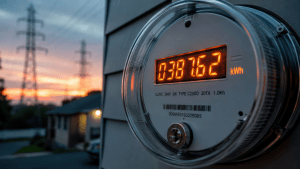
The Government has announced new requirements to drive the use of smart or advance meters across non-domestic premises
Implementation
From 1 September 2027, eligible small and medium-sized businesses entering a new fixed-term energy contract will need to have, or agree to have, a smart or advanced meter installed. These requirements will only apply to contracts entered into from this date.
Customer communications
From 1 January 2027, suppliers will begin providing information to business customers about the new smart meter requirements, including what is changing, why the requirements are being introduced and any actions customers may need to take.
Customer protections
New protections will be introduced to support customers throughout the installation process. Suppliers will be expected to arrange installations within defined timescales, provide clear information about contract terms and ensure customers are not disadvantaged where delays are outside of their control. Additional protections will also be available where premises require upgrade works or have specific operational needs.
Energy brokers and intermediaries
Energy brokers and other third-party intermediaries will also be required to support these changes. This will help ensure customers receive consistent information about smart meter requirements and understand any implications before entering into new fixed-term contracts.
A view from our PPA Team: 3 Minute Brief: PPAs with Ross Irvine
Why businesses may need to rethink how they buy power
While CPPAs are often associated with sustainability, they're increasingly becoming a strategic tool for securing access to power, managing risk and providing greater certainty in a changing energy market.
The way electricity generators sell power is changing dramatically, with fewer generators expected to sell into the forward market over the coming decades. In our latest A View From, Ross Irvine explores what this could mean for businesses seeking price certainty, why market volatility may increase as the energy transition accelerates, and how Corporate Power Purchase Agreements (CPPAs) can help organisations secure long-term value and reduce exposure to future market risk.
🎥 Watch Ross Irvine's 3 Minute Brief for his perspective on one of the most significant changes facing energy buyers today.

Have you tuned into our Podcast series, Talking Power?
Talking Power is EDF Business & Wholesale's podcast on the ideas, innovations and market forces shaping the future of energy. Hosted by David Edmonds, the series brings together experts from across the energy industry to explore the opportunities and challenges of the transition to a low-carbon future. From energy markets and trading insights to renewables, flexibility, electrification and net zero strategies, Talking Power unpacks the topics that matter most to businesses and the wider energy sector. Tune in here
💡Look out for your next edition of the Energy Roundup!
Related articles

Why electricity prices spiked during the 2026 summer heatwaves

