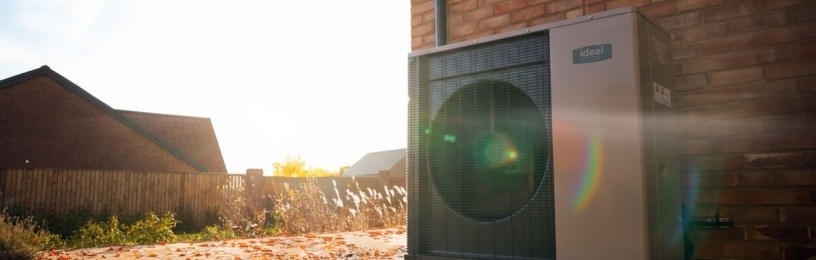
Switching to a heat pump: An honest guide for small business owners
Benefits of switching to a heat pump for small businesses
- Financial: Lower energy bills, BUS grant, long-term savings.
- Environmental: Reduced carbon footprint, improved environment, social and governance credentials.
- Business resilience: Less exposure to volatile gas prices, futureproofing.
- Operational: Get reliable heating/cooling, low maintenance, long lifespan.
- Marketing: Eco-friendly business image attracts sustainability-conscious customers.
So what actually is an Air Source Heat Pump?
Air source heat pumps (ASHPs) are low-carbon systems that draw heat from the outside air and use it to warm your building and hot water. They work on a simple principle – even when the outside air feels cold, it still contains usable heat. The system captures the heat and transfers it indoors. They work efficiently even at low outdoor temperatures, making them a versatile choice for various climates. Because they can operate efficiently at low outdoor temperatures, ASHPs are suitable for a wide range of climates and property type.
One of the biggest advantages of ASHPs is that they work all year round. In winter, they provide heating; in summer, many models can also reverse to deliver cooling too. This makes them an attractive, all‑in‑one climate control option for businesses looking to streamline their energy systems.
By using naturally occurring energy from the air, ASHPs offer a more sustainable alternative to traditional heating. They help reduce reliance on fossil fuels and support wider efforts to cut carbon emissions - an important consideration for businesses focusing on ESG performance and long‑term sustainability. This could be particularly beneficial for businesses with high gas usage. Industries such as:
- Hospitality -Restaurants, cafés, pubs, commercial kitchens and catering businesses rely heavily on gas for cooking, heating and hot water.
- Care homes & residential care facilities
- Some pharmaceuticals manufacturing & some metal manufactures
The UK Government has set a target of installing 600,000 heat pumps a year by 2028. Join the future of boilers.
To Heat pump or not to Heat pump - Pro’s vs Con’s
Pros | Cons |
🔋High efficiency – Produces up to three units of heat per unit of electricity, reducing reliance on traditional heating and cutting energy bills | 💷High initial investment – Equipment, installation and potential radiator/pipework upgrades can make upfront costs high. |
💸Lower operating costs – Efficient performance can cut monthly heating costs; heat-pup-specific tariffs can boost savings | ❄️ Reduced efficiency in very cold weather – Performance may drop in harsh winters, sometimes requiring backup heating. |
🌍Reduced carbon emissions – Uses renewable heat from the air, helping lower your carbon footprint and support sustainability | 🏠Aesthetic & space impact – Outdoor units may be considered unattractive by some business owners. Needs suitable outdoor space; can be challenging for properties with limited external areas. |
♻️Supports renewable energy Reduces reliance on fossil fuels and encourages growth of green technologies | 🔊Noise levels – Outdoor units produce some noise depending on placement; proper assessment helps minimise this. |
💰Government grants – £7,500 grant available to eligible property owners, reducing upfront installation costs and improving ROI. | ⚡Energy price sensitivity – Savings depend on electricity prices; higher rates can reduce benefits unless supported by tariffs or solar/battery systems. |
Owners vs landlords – Boiler Upgrade Scheme (BUS) eligibility
This mainly falls under the ownership question with regards to heat pumps and who can and can’t apply for the BUS grant etc. So, to be eligible for the grant:
- Must own the property of have written landlord consent if leaseholder
- Property must be in England or Wales
- Must have a valid EPC (issued within 10 years)
- System must replace an existing fossil fuel system or electric boiler
- Installer must be MCS certified
There is no minimum lease length, but eligibility depends on ownership or landlord agreement.
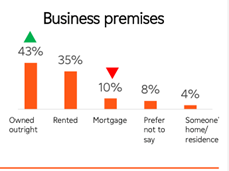
Let’s be transparent – What could hold up your application
- Ownership issues: Leaseholders without landlord consent cannot apply.
- EPC problems: Missing or invalid EPC blocks approval.
- Installer non-compliance: Must be MCS-certified.
- Timing delays: Installation must occur within 120 days of approval.
- Ineligible systems: Must replace old fossil fuel/electric systems.
- Incomplete documentation: Missing proof, quotes, or consent forms.
- Starting work too early: Installation cannot begin before application submission.
- Misunderstanding grant payment: BUS grant is deducted from installer invoice, not paid directly.
Your heat pump checklist: Documents required
There are also some required documents:
- Proof of ownership/landlord consent
- EPC certificate
- Installer details and certification
- Project type, capacity, and installation address
- Quotes/costs breakdown
- Consent for installer to submit application
How small business differ from home installs:
System size: SME heat pumps are typically larger than residential (10–45 kW vs 5–12 kW).
- Planning & building:
- Permits may be needed for listed or conservation-area properties.
- Must comply with building regulations (thermal efficiency, safety, hot water storage).
- Space & noise: Outdoor units are larger/noisier; placement must avoid complaints.
- Electrical requirements: May need upgraded supply for continuous operation.
- Integration: Must work with existing heating (radiators/underfloor) and account for insulation levels.
It’s worth pointing out here that we do not sell a heat pump of the size required for most SME’s
We recognise the importance of hearing directly from our customers, that’s why we run regular customer insight to improve our offers and tailor services to our small business customers needs.
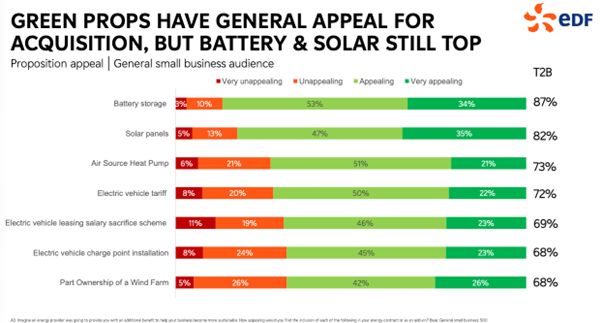
51% of small businesses that we interviewed said Heat Pumps are appealing to them and 21% said they are very appealing
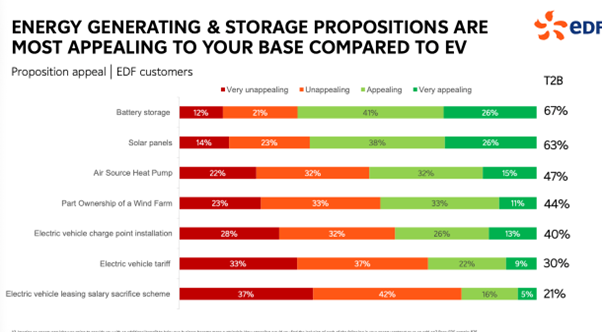
32% of our EDF small business customers said Heat Pumps would be appealing to them and 15% said they are very appealing.
Heat pumps won’t be the perfect solution for every small business, but for the right buildings they can deliver lower running costs, stronger sustainability credentials and a futureproof alternative to gas. Understanding the requirements, the paperwork and any potential hurdles from the outset helps ensure fewer surprises later and a smoother journey from initial research through to installation.
As Britain moves toward cleaner heating and ambitious heat pump targets, now is a great time for small businesses to reassess their options. Whether a heat pump ends up being the right next step for your premises or not, having the facts puts you in control of your energy future.
Related articles


