Address by EDF UK Chair, Sir Alex Chisholm at the Nuclear 2025 conference
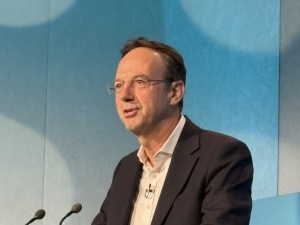
Today EDF UK's Chair, Sir Alex Chisholm, delivered an address at the Nuclear Industry Association's Nuclear 2025 Conference in London.
Introduction - the nuclear bug
Good morning. It’s a pleasure to be here with you today.
It has been a year of huge progress for Britain’s nuclear sector, and the government has shown real commitment to make this so.
It’s been a year and a half since I started as Chair of EDF, and I feel truly fortunate to have started at such a great time, with the nuclear renaissance in full swing, and the momentous decision to go ahead with a second EPR project, Sizewell C.
But my passion for nuclear has been a while in the making – indeed it’s nearly a decade since I first caught the nuclear ‘bug’.
Maybe others here can remember when that moment happened for them?
For me, it was in July 2016, my first week as Permanent Secretary of the Department for Energy and Climate Change. I was called over to No 10 to brief the newly appointed Prime Minister, Theresa May, on why she should meet a socialist French President who was very keen to shake hands with her to launch together the UK’s first new nuclear project in a generation at Hinkley Point C.
Having just had my own briefing on why we needed a new GW nuclear plant in the UK, I thought the PM would readily share my enthusiasm. I was wrong about that. The launch had to be pulled, the French President to cancel his flight, and we had a torrid summer re-examining the proposition from every possible dimension before the UK Government was ready to sign up to the Final Investment Decision, after various reassurances.
Perhaps it was this baptism of fire into the world of nuclear energy - and the politics that goes with it – that got me really hooked.
Today we meet, almost 10 years later, with the earthworks all done at Hinkley, most of the construction finished, and the team now getting stuck into the big fitout.
Hinkley is the cornerstone project for the nuclear renaissance we’re seeing in Britain.
And the renaissance could not be more timely, as output this year from our aging nuclear fleet will be c.33TWh, 13% of what the UK uses, and the lowest level since 1981.
Given Christmas is fast approaching, you may be interested that the Christmas No.1 that year, from The Human League, was "Don't You Want Me”.
For a long time, this could have been the chorus line for the UK nuclear industry.
But after a 30-year hiatus in our new build story, nuclear is ‘wanted’, nuclear is back.
A national endeavour
The nuclear industry is a special industry, one that is at once national, global and local.
National in the sense that it underscores core State goals - like keeping the lights on.
Also national because it is so big, so powerful and so long-term.
When you have a single station able to power 6 million homes – as will be the case for each of Hinkley Point C and Sizewell C – the State is going to be intensely interested.
Once Hinkley Point C and Sizewell C come online, they will be delivering clean, secure, sovereign electricity well into the next century - which I find an extraordinary thought.
Add in the huge financial investment, the regulatory processes, the industrial and employment benefits, the ultra-long-term storage requirements, and the geostrategic aspects; yes – nuclear business is truly State business.
But the State alone cannot deliver nuclear power. That requires partnership with the private sector, expert input from leading universities and colleges, and support from the communities where the power stations operate – a whole-of-nation endeavour.
When you think about Hinkley Point C, don’t think only of the construction site in Somerset, think about the factories, facilities and communities across the UK that supply the components, materials and skilled labour needed.
Building Hinkley Point C relies on the output of 4,600 UK firms.
Just as the running of our existing nuclear fleet relies on 1,400 firms.
Since EDF took over British Energy in 2009 the company has nurtured and extended the lives of these plants, recognising they are a vital national asset.
As well as a very large amount of clean, reliable power, the AGR plants have delivered huge economic benefit – thousands of jobs, positive community impacts, over £120 billion in economic value so far.
When EDF acquired the fleet, the youngest two AGR stations, Torness and Heysham 2, were due to stop generating in 2023. This would have meant only Sizewell B was operating this year.
EDF has invested over £8bn since 2009 to keep these stations operating a lot longer – some 38 years’ worth of life extensions across the AGR fleet; enough to power every UK home for nearly 3 years.
Our youngest AGR stations are due to end generation in 2030. The ambition is to go beyond this, but it will take continued investment, expertise and regulatory support, and with no guarantees.
Our oldest AGR stations – Hunterston B and Hinkley Point B – are now free of fuel and are due to be transferred to the NDA family in 2026 – a great example of cross-industry collaboration, and delivering to cost and schedule.
The focus for Sizewell B – of course a newer plant, and using the PWR technology – is on investing to enable a potential 20-year life extension to 2055, subject to agreeing an appropriate commercial model.
Nuclear is also a national endeavour in that it requires all our national capabilities – in skills as well as the supply chain.
A couple of weeks ago I had the pleasure of opening our new UK EPR Centre in Bristol, bringing together over 1,000 talented individuals to provide common support and services across Hinkley Point C and Sizewell C, and in service of the UK nuclear sector more broadly. It’s a fantastic opportunity for collaboration, shared learning and continuous improvement.
And nuclear is national in that it requires national financial resources.
Hinkley Point C epitomised the challenges of financing a first-of-a-kind project with significant construction risk. Consequently only State-backed developers – primarily EDF – were willing to bear the financial burden.
Second-of-a-kind is a different case: enabling us to 'build and repeat' a design with minimal changes. This really helps to bring down costs and risks, as expertise, supply chains and skills are developed, and best practice established.
We’re seeing plenty of examples of replication benefits at Hinkley Point C, with performance improving by 20-30% when we repeat work from Unit 1 to Unit 2.
We’ve transformed the way we’re building the station, with prefabrication in civil construction now approaching 60% - effectively making Hinkley Point C a Large Modular Reactor.
These productivity gains and innovations will benefit Sizewell C from the start.
The reduced construction risk has made the project more attractive to private investors.
For the first time, private investors are working together with government to fund a new nuclear project.
And the UK’s pioneering model – combining Regulated Asset Base, direct government equity, and institutional investment – offers a blueprint for balancing affordability, energy security, and investor confidence.
So the UK’s nuclear renaissance has real financial underpinnings.
But becoming a truly successful nuclear nation will require us to do so in an efficient and cost-effective way.
A key part of that is making sure our national regulatory environment is fit-for-purpose: this means getting on with reforming regulatory practice, permitting, and planning frameworks, rather than delaying projects with excessive barriers and constraints that drive delay and cost.
The ground-breaking report from the Nuclear Regulatory Taskforce is very timely and welcome.
So too is the positive reaction from government, and the commendable sense of urgency to implement the necessary changes. As the PM himself said, to deliver the UK’s nuclear potential, “regulation will need to be world-class: fast-paced, safe, and coherent.”
We also need to move to a mode of steady roll-out, to avoid another national hiatus.
We’ve had to learn the hard way that stop-start doesn’t work for anyone – not factories, not construction companies, not training providers or any of the other actors in the nuclear industry.
A steady roll-out means looking beyond the completion of Hinkley Point C, Sizewell C and even Wylfa, to know in good time what comes afterwards…
…. it means bridging the gap to the missing parts of the UK nuclear cycle, including better fuel production and storage options…
… it also means harnessing the opportunity to export our nuclear know-how to support the renaissance of nuclear across Europe and the rest of the world.
A global family
This brings me to the second characteristic of nuclear that makes it so special: it is part of a global family – a global workforce, a global supply chain, a global practice.
To individually succeed we must all succeed, which is why international collaboration is crucial for our collective success.
France and the UK are an excellent example of the value global collaboration brings.
Over summer I was lucky enough to attend one of the events at the UK-France Summit, at 10 Downing Street, and with our Prime Minister and President Macron, Sizewell C was the first point of conversation, with both leaders noting it as a source of proud partnership between our countries.
Similarly to Sizewell C, Hinkley Point C has Franco-British collaboration at its heart:
- Everyday thousands of engineers in France and Britain are working and learning together – and that makes both Britain and France’s nuclear industries stronger.
- Key components for Hinkley Point C and Sizewell C come from French companies like Framatome and Arabelle, while British businesses are benefiting from 64% of the value of Hinkley Point C.
- And the learning and skills developed at Hinkley Point C are paving the way for success on the French EPR2 programme.
And, of course, it is not only the UK and France who work closely together in the nuclear sphere. The UK and US have long cooperated closely, and just two months ago, during the President’s visit, agreed a new collaborative initiative to streamline regulation and accelerate the deployment of advanced nuclear reactors.
EDF is proud to be supporting these UK-US efforts:
- in September, we announced plans with Holtec and Tritax to develop our former coal site at Cottam with data centres and SMR technologies
- the same month, we also saw Centrica and X-Energy enter a Joint Development Agreement to deploy AMR technology at our Hartlepool nuclear site.
Think global, act local
Of course, nuclear isn’t just about large, international firms, or international trade and diplomacy.
When it comes to developing these projects, we need to think global but act local…
… because we can only be successful in our nuclear renaissance with the support of local communities and businesses.
This local support is the underpinning of national support.
That’s why at EDF, being a good nuclear neighbour is at the forefront of our priorities.
When I visit our stations, and meet the teams and local stakeholders, I am enormously heartened by the strength of positive local support and pride in ‘their station’.
That’s the spirit in which we’re developing Hinkley Point C, which has seen £5.3 billion spent directly with businesses across the South West.
This includes companies like the Somerset Larder, Hinkley Point C's local catering supplier, which serves thousands of meals every day using local ingredients, and which came into existence as a result of the project.
Hinkley Point C is helping the local economy overcome a legacy of low growth, poor productivity and limited social mobility.
Bridgwater’s productivity levels are now 10% higher than surrounding towns.
Of the 1,500 apprentices trained, 70% come from the South West.
As I was raised in Somerset myself, I know how much these opportunities mean to local people.
And this isn’t just a one-off, as teams will be rolling onto Sizewell C, and the skills developed at Hinkley Point C will be a fillip for future nuclear projects and the clean energy transition more broadly.
Conclusions
So to conclude – nuclear is back, it’s wanted, and that is great news for our country’s energy future, its economic future and for the thousands of people and businesses supporting these projects across the UK.
If you’ll allow me another 80s throwback – success will require us to go ‘back to the future’: unlike Marty McFly we can’t change the past, but we must learn from its lessons and avoid a stop-start approach to nuclear development, which has cost us dearly, and instead follow the fleet model for build and operate.
To get the full benefits from our nuclear renaissance and avoid a return to the pre-renaissance ‘dark ages’:
- We need to build, build, build at Hinkley, Sizewell and now Wylfa – and we need to start planning today what comes next.
- We need to capitalise on our renewed UK supply chain and our retrained nuclear workforce.
- We need to heed the government's call for lower cost and more proportionate regulation, while maintaining the industry's exemplary safety record – guided by the work of the Nuclear Regulatory Taskforce.
- And we need to maintain community support through engagement and partnership with local communities, to maximise opportunities from these megaprojects for people who live and work nearby.
Because when we talk about success, people are the key ingredient in all of this.
It’s their vision and their passion that turn our country’s nuclear ambition into reality.
That includes everyone gathered here in the room today.
I’m inspired by the human endeavour I see every day within our company and across our nuclear industry.
And that’s why I have found, once bitten by the nuclear bug, you tend not to recover – in the best possible way.
Thank you very much.
Related articles

Why distribution network investment matters for affordability and energy security

What more needs to be done to tackle persistently high energy bills?
