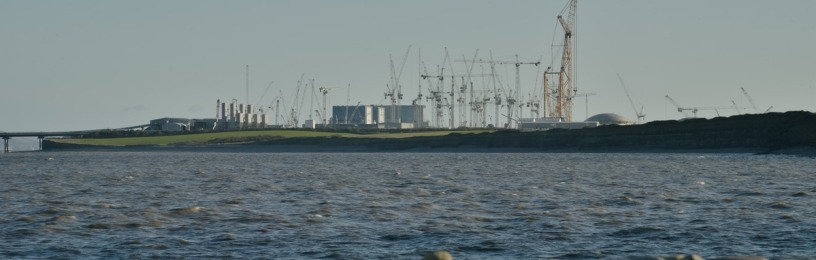
Hinkley Point C's Plans for Fish Protection
Hinkley Point C has written to communities around the Severn Estuary to tell them that we are pausing work on proposals for new areas of saltmarsh while we work to establish the suitability of a new acoustic fish deterrent technology.
The saltmarsh was intended to be compensation for the project not installing an acoustic fish deterrent outlined in our 2013 planning consent. Our power station is the first on the Severn Estuary to have fish protection measures built into its design. We have built low velocity intake heads and we are building a fish return system. However, installing, maintaining and operating 280 loudspeakers in fast-flowing and muddy waters would have posed an unacceptable safety risk for divers.
Now an innovative technology, not available when the consent was granted, means it's possible to deploy an acoustic fish deterrent without the need for divers. Pioneered in the South-West and used in fishing fleets around the world, the technology uses electronic transducers to target specific fish species with high-frequency sound. The efficiency of the system means it can be precisely tuned and installed and serviced from the surface. Because it uses much less power than a loudspeaker system, a mains power supply is not needed.
We are now working with experts to provide the scientific data to underpin the case for using it at Hinkley Point C and as a result have announced a pause to all development work on the creation of saltmarsh in the area.
FIND OUT MORE
Related articles

Hinkley Point C finishes tunnelling fish return system

We are Here to Listen: How to Get in Touch with Hinkley Point C
