Torness peregrines take flight as station marks environmental anniversary
Torness Power Station’s visiting pair of peregrines have had another successful year as the site celebrates a decade of environmental excellence.
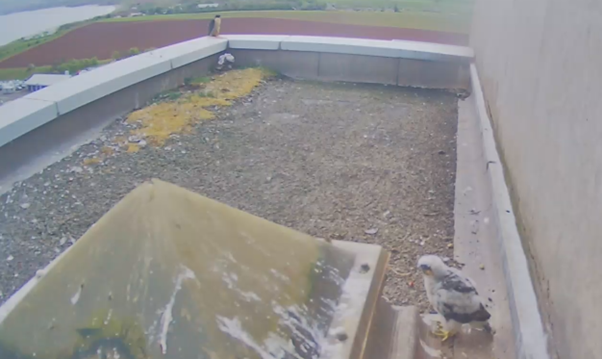
More than 50 chicks have fledged from the station’s rooftop since records began 25 years ago and this year the pair have successfully raised another two. Chicks 54 and 55 have recently flown the nest.
Peregrine falcons are the fastest creatures in the animal kingdom, reaching speeds of more than 200mph during their hunting dive. The power station provides a secure breeding environment for these apex predators, away from egg thieves and with a plentiful food supply.
This year also marks 10 years since the station secured the Biodiversity Benchmark. The accreditation, which is awarded by The Wildlife Trusts, certifies the good management of biodiversity on sites owned by businesses. It is the only site in East Lothian to hold the accreditation.
The Wildlife Trusts’ Head of Corporate Partnerships, Emma Price Thomas, said: “It’s fantastic news that peregrines at Torness Power Station have had another successful year. Stories like this show that through careful management, wildlife can thrive in unlikely places. Retaining the Biodiversity Benchmark at Torness for 10 years is testament to EDF’s commitment to improving their sites for wildlife.
“This certification challenges businesses to take responsibility for nature recovery through effective habitat management, surveying and sustainable use of land. Torness is being managed well for wildlife and we look forward to seeing even more success stories in the future.”
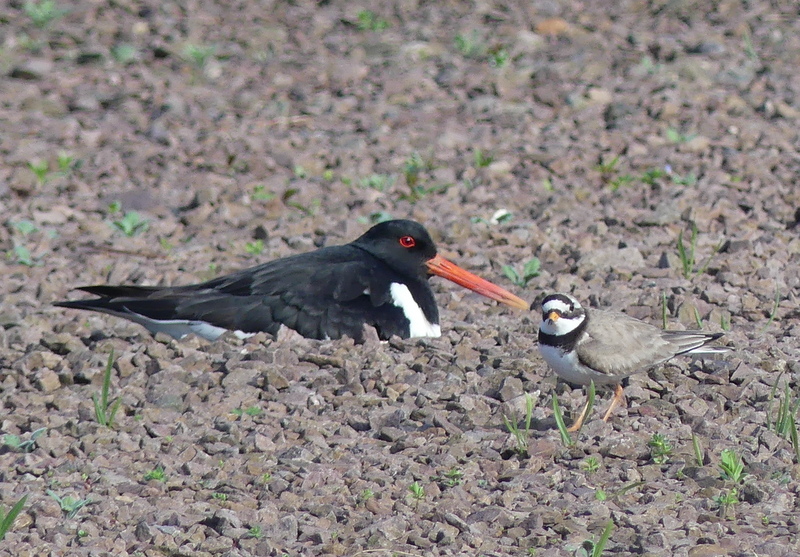
The site supports a wide range of wildlife and has become a haven for some rare species. It currently supports the only known breeding pairs of ringed plover in East Lothian with the population up to three pairs since 2019.
It is also Scotland's first and only known site supporting ivy mining bee, along with 120 other invertebrate species.
Other highlights include:
- In total, 21 species of butterfly and 187 moth species have been recorded at Torness, including Brimstone, which was seen during the hot weather of 2022. Buckthorn shrubs have been planted to provide habitat for Brimstone as part of a wider initiative by East Lothian Council.
- Thirty-nine species of bird have been recorded breeding at Torness over the last 10 years. In addition to the ringed plover and the peregrine, yellow wagtails breed on site most years, an uncommon species in East Lothian.
- Areas disturbed by construction of the station in the 1980s now support a diverse range of plants including locally uncommon yellow bartsia, pyramidal orchid and common broomrape.
Clare Galloway, who works in the station’s Environmental Safety Group, said: “We actively manage the land around the power station to make sure it is as welcoming to as diverse range of flora and fauna as possible.
“As well as roping off areas of the car park to support breeding birds, we plant specific shrubs and plants to give a variety of species the best chance of flourishing possible.
“It is always a delight to make new discoveries when we carry out our monitoring and it just goes to show that nature and industry can co-exist if a sustainable approach is taken.”
For more information, contact: fiona.mccall@edf-energy.com