Bay Hydrogen Hub
Bay Hydrogen Hub is an innovative end-to-end hydrogen project, from production to end use, showcasing novel technologies along the supply chain.
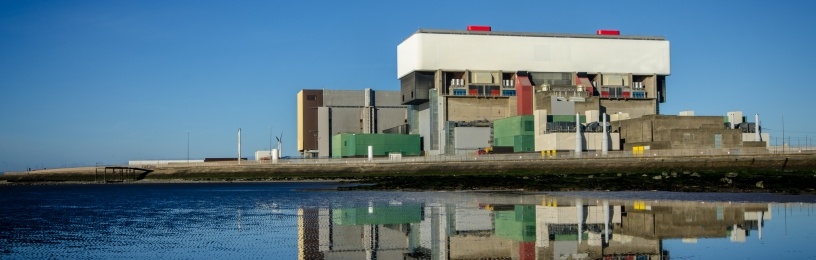
The Bay Hydrogen Hub project is a key stepping-stone towards developing nuclear hydrogen production, exploring innovations to deliver hydrogen to dispersed industrial sites, and towards the decarbonisation of the asphalt industry. Our consortium will detail how solid-oxide electrolysis cell (SOEC) technology integrated with nuclear heat and electricity, can provide low-carbon, low-cost hydrogen to industry. This will prove an element of our vision of a broader energy hub, using the unique zero carbon heat and electricity from a nuclear plant optimally across different sectors.
The innovation
The integration of SOEC with nuclear heat and electricity yields a remarkable >20% potential increase in hydrogen production efficiency compared to established electrolyser technologies – this provides a potential for lower cost hydrogen production which will be key for future low-carbon economies. The use of hydrogen as a fuel at asphalt sites has not yet been physically demonstrated anywhere in the world, but has the potential for drastic carbon reduction, supporting the UK’s net zero mission and ensuring that the UK continues leading the way in the cement and asphalt industries. Additionally, the consortium has developed a Nuclear Enabled Hydrogen Handbook to enable the rapid development of SOEC technology at nuclear sites.
Project objectives
- Assessing the engineering and regulatory requirements for siting a Solid Oxide Electrolyser (SOE) at a nuclear station.
- Developing an engineering design for hydrogen production and compression at a nuclear station, evaluating the economics and capturing any challenges, limitations, and opportunities.
- Investigating the engineering feasibility and economics of transporting hydrogen via high pressure composite tube trailers.
- Developing an engineering design for converting an asphalt site to hydrogen, identifying equipment development challenges and site restrictions.
- Producing a workable end-to-end solution that marries hydrogen production volume and timing with delivery options and end-use business as usual operations.
- Investigating the future commercialisation and scalability of the production, distribution and end-use hydrogen technologies and applications.
Competitive benefits
The ability to couple hydrogen production to nuclear power stations and use zero carbon heat is a key competitive advantage for future nuclear projects, particularly for new and emerging nuclear technologies.
- On-site H2 production with enhanced efficiency: Our exploration showcases the feasibility of on-site hydrogen production at nuclear plants through steam utilisation. This innovation promises a revolutionary boost in efficiency—yielding a remarkable 20% more hydrogen with the same overall energy input compared to conventional PEM and Alkaline electrolysis.
- Strategic alignment with future hydrogen demand: The projected upsurge in hydrogen demand during the 2030s corresponds with concurrent advancements in nuclear and hydrogen production technologies. Our project’s forward-looking design ensures that we are poised to meet the escalating hydrogen demand effectively.
- Emission reduction through hydrogen adoption: A competitive advantage lies in the emission reductions achieved through the replacement of fossil fuels with hydrogen in energy-intensive industries, such as asphalt and cement. Our initiative aligns resolutely with global emission reduction goals.
- Hydrogen - fuel enhancer: Use of hydrogen as a fuel enhancer for cement signifies a transformative shift - offers a gateway to leveraging lower grade, cost-efficient, and higher biomass waste-derived fuels, ushering in a new era of sustainable practices.
The process
The process involves designing the system to utilise steam and electricity generated by nuclear power stations to produce hydrogen via a solid oxide cell electrolyser.
- For industrial end use demonstration, hydrogen is procured and transported to one of Heidelberg’s Asphalt plants.
- Once at the plant, the hydrogen is used to generate heat, which extracts moisture from the aggregate.
- The final step involves mixing the aggregate with other components to produce asphalt, which is then used to surface roads all around the UK.
Partners
EDF
EDF’s nuclear sites are prime sites for new nuclear development. EDF is helping Britain achieve net zero by leading the transition to a cleaner, low emission, electric future and tackling climate change. It is the UK’s largest producer of low-carbon electricity(1) and supplies millions of customers with electricity and gas. It generates low carbon electricity from five nuclear power stations and more than thirty onshore wind farms and two offshore wind farms. EDF is leading the UK's nuclear renaissance with the construction of a new nuclear power station at Hinkley Point C, and there are advanced plans for a replica at Sizewell C in Suffolk.
Heidelberg Materials
Heidelberg Materials is a leading supplier of heavy building materials to the construction industry. It is split into four business lines – aggregates (crushed rock, sand and gravel), concrete, asphalt and contracting and cement – which together operate around 280 manufacturing sites and employ more than 3,500 people. For more information visit: www.heidelbergmaterials.com. Formally known as Hanson in the UK, Heidelberg Materials is one of the world’s largest integrated manufacturers of building materials and solutions, with leading market positions in cement, aggregates and ready-mixed concrete. It is represented in over 50 countries with more than 51,000 employees at almost 3,000 sites. At the centre of its actions lies responsibility for the environment. As the forerunner on the path to carbon neutrality and circular economy in the building materials industry, it is working on sustainable building materials and solutions for the future. It enables new opportunities for customers through digitalisation.
Vulcan Burners
Founded in 2005, Vulcan Burners has become one of the leading burner manufacturers for asphalt plant technology. Designed, engineered and manufactured in the heart of the world's largest materials handling export hub of Northern Ireland, Vulcan Burners has a global reach with an extensive international dealership network. The Vulcan Burner is created on a foundation of efficiency, innovation, and versatility providing the asphalt user with a progressive production experience.
National Nuclear Laboratory
National Nuclear Laboratory is the UK’s national laboratory responsible for nuclear fission R&D and occupies a unique position in the nuclear innovation environment, taking science from inactive laboratory-scale demonstration to deployment. It is the custodian of unique world-leading nuclear skills, facilities and equipment vital to the UK and aims to support policy and provide long-term sustainable value for the UK in four Focus Areas: Clean Energy, Environmental Restoration, Health & Nuclear Medicine, and Nuclear Security & Non-Proliferation.