EDF and Ethical Power partner to deliver a CPPA, securing long-term solar power
EDF and Ethical Power partner to deliver Corporate Power Purchase Agreement (CPPA) with UK-based FTSE100 company securing long-term solar power
We’ve recently been working to facilitate a Corporate Power Purchase Agreement (CPPA) with a UK-based FTSE100 company using an Ethical Power solar project.
CPPAs are direct contractual agreements between a business and a renewable energy generator, which are supported by a balancing and shaping partner. They provide many benefits for businesses, renewable developers, and the environment, including:
- Protecting businesses against market price volatility, providing increased budget certainty and the ability to secure sustainable credentials
- Providing developers with financial certainty, security, and confidence to make a final investment decision to start building renewable projects
- Creating additionality of new renewable energy sources on the GB grid
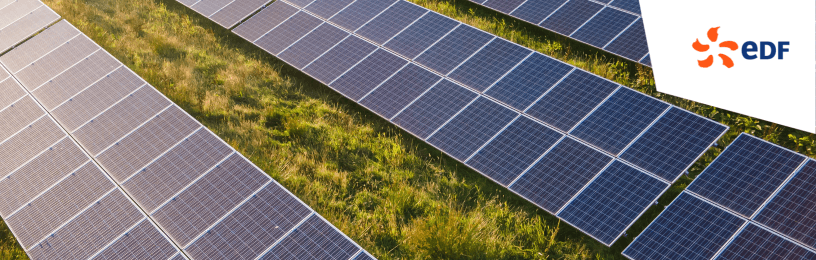
The power designated for this CPPA will come from the Twitch Hill Solar Farm, a new 27MW solar project in Shropshire, built by Ethical Power and due to commence generating electricity in early 2025.
The CPPA has been signed between the corporate and Lynher Energy, a joint venture between Napier Park Global Capital and Ethical Power. Although, as with any CPPA, there are usually three parties required to make it possible:
- The renewable generator (Ethical Power) - responsible for developing, building, and operating the solar power asset
- The power balancing and shaping partner (EDF) - responsible for transferring the energy from the solar park into the corporate’s energy supply agreement
- The corporate - who will be receiving, paying for and using the energy to power their business for the next 15 years
So, what made this CPPA such a success?
- Using a suitable CPPA structure: the agreement was structured using a physical sleeved CPPA, designed to provide reliable solar power to the corporate. The structure is set up in a way that enables the power to be seamlessly transferred from the generator, via EDF (the shaping and balancing partner), to meet the corporate's energy purchasing requirements. This is the most common CPPA structure dealt with by EDF, as it is usually the preferred approach for most corporates to work well with their supply agreements, and the market standard.

As the balancing and shaping partner, EDF are managing the differences between the consumption and generation to facilitate the agreement. This process involves shaping intermittent solar power generated at Twitch Hill Solar Park into baseload blocks. The baseload energy is then sleeved to the corporate via their energy supplier, making it readily accessible and useable. You can read more about power balancing and shaping, and how it works here.
- Timely negotiations: the turnaround time for this CPPA negotiation was approximately five months. While that may seem lengthy, in the world of complex Power Purchase Agreements involving multiple parties, it is considered very quick. This was reinforced by EDF’s expertise in the CPPA market to be able to negotiate the agreement in a timely manner.
- Seamless approach: the CPPA structure has been designed to make it as easy as possible for the corporate to receive the energy into their supply contract. EDF adds value through being able to structure and support complex agreements, which is critical to meet the requirements of all counterparties involved. EDF can be the balancing and shaping partner in a sleeved CPPA structure, whether they are the corporate’s incumbent energy supplier or not. Where EDF provides these services without being the energy supplier, it can transfer the energy to the corporate’s incumbent energy supplier.
CPPAs, along with the associated power balancing and shaping service agreements, typically span longer durations than standard energy supply contracts. The standard contract length for a CPPA is between 10 and 20 years. Establishing the right structure and approach is key to maintaining flexibility and ensuring a continuous power supply throughout the contract term, regardless of the energy suppliers involved. This approach ensures a reliable source of renewable power and supports the corporate to reach their decarbonisation targets.
How does this help Britain achieve net zero
This real-life example demonstrates how businesses can help support the growth of renewables and development of a new solar park. For many developers, the signing of a CPPA gives them the financial certainty to make a final investment decision and start building their projects. The energy produced not only powers the corporate business, but also contributes to the UK’s renewable energy supply, contributing towards Britain reaching net zero.
Although historically CPPAs have been complex to negotiate, demand is growing, and new solutions are making the process more straightforward. This is largely driven by corporates striving for new and innovative ways to reach net zero and report on their carbon emissions, as well as to protect themselves from market price volatility. Whilst still a relatively new way of energy procurement for small and large corporates, CPPAs are proving to be an effective way of meeting sustainability goals and are becoming increasingly attractive solution for sourcing renewable energy in the UK.
Interested in a CPPA?
As well as being Britain’s largest generator of zero carbon electricity, EDF also buy the most renewable electricity of any energy supplier in Great Britain, with the highest PPA market share of capacity under contract.*
EDF are continuing to lead the way in the PPA market, as experts in many different PPA and CPPA structures, utilising market expertise to structure, facilitate and support agreements between corporates and generators.
Contact us today at PPA@edfenergy.com
*Cornwall Insight PPA Market Share Report, August 2024
Related articles

AR8: What Should Developers, Investors and Energy Buyers Expect from the UK's Next CfD Auction?

UK electricity demand: why it matters for business competitiveness and what must change
